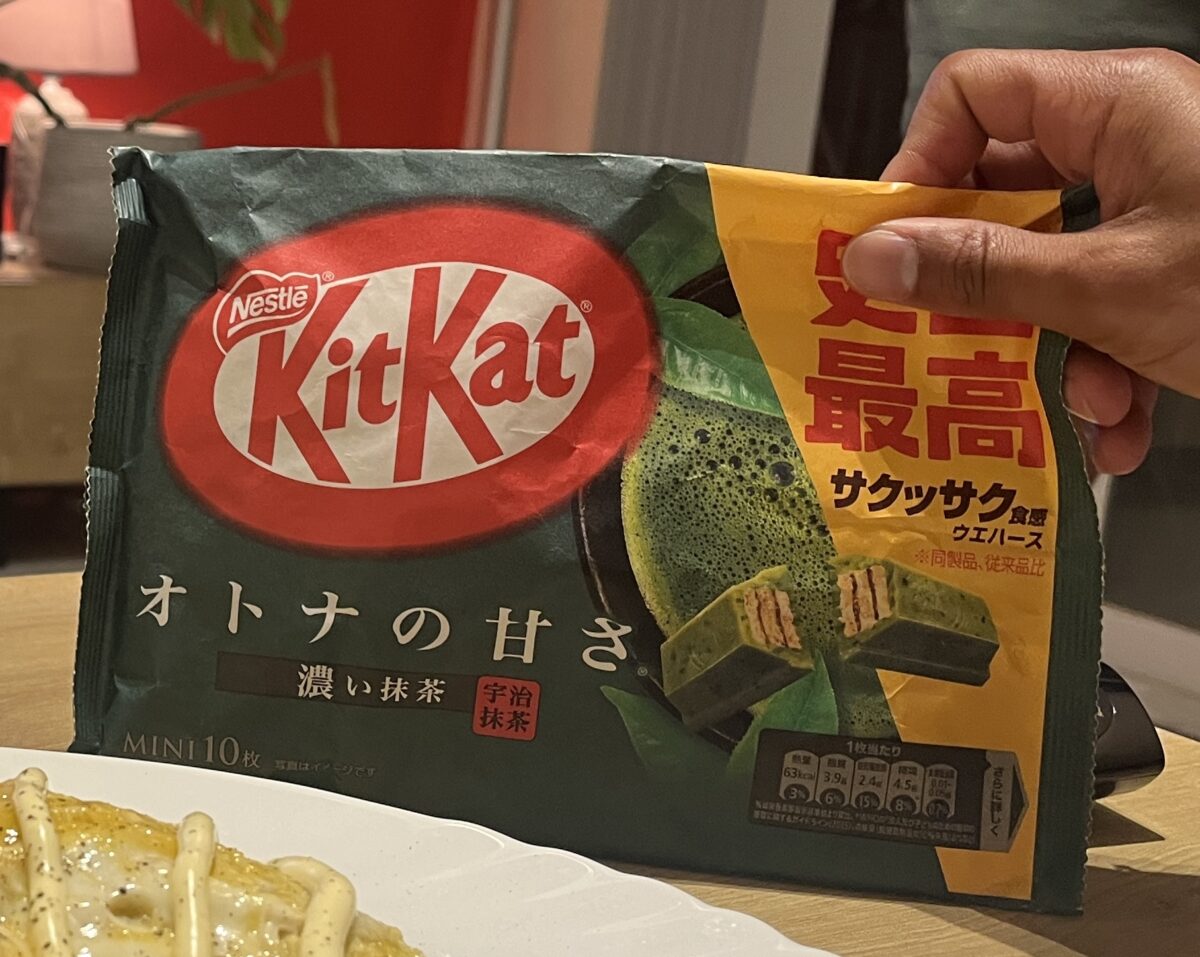
Japan is famous for its major cities like Tokyo, Osaka, Kyoto, and Hiroshima. These cities are undoubtedly exciting and full of must-see attractions. But there’s so much more to discover in Japan beyond these well-known spots.
If you travel north of Tokyo, you’ll find the Tohoku region, a place rich in nature, hot springs, culture, and history. Many visitors—and even some Japanese people—may have never heard of these hidden gems. They might be unknown even to locals, yet they hold incredible beauty and unique experiences.
I’ve personally visited these places and experienced them firsthand, and I can confidently say they’re worth seeing. In this article, I’ll introduce some of my favorite spots in Tohoku—places that will give you a real taste of Japan beyond the usual tourist path.
Aomori
Mt.Osore Sacred Site

Mount Osore is a unique sacred place where images of hell and paradise exist side by side. Created by volcanic activity, the stark landscape and rising white sulfurous smoke give the area an eerie, otherworldly feel.

At the same time, the clear blue lake brings a sense of calm beauty, creating a striking contrast that has fascinated visitors for centuries.

The Sanzu River flows through this sacred site as a symbolic boundary between the human world and the spiritual realm.
About 500 meters before the temple, you can see its vermilion bridge, which is not open for crossing but is still well worth a visit before entering the temple grounds.

There is also a free hot spring here, used not simply for relaxation but for purification before prayer. Since this kind of onsen is very rare in Japan, it offers a special experience when visiting Mount Osore.
Hirosaki Castle 🏯

Usually, this is a quiet place, but when cherry blossom season comes, it suddenly becomes much more lively. It is so beautiful that many people call it one of Japan’s best cherry blossom festivals.
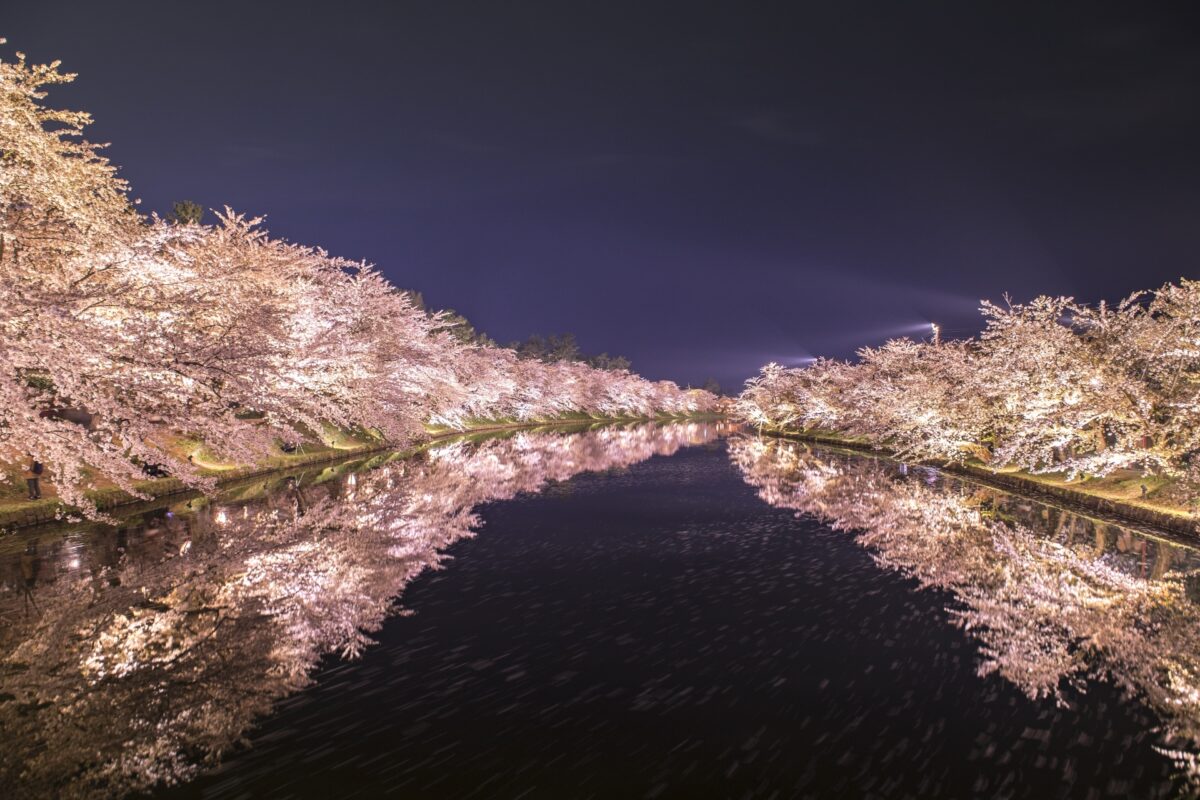
At night, the blossoms reflected in the pond around the castle create a stunning mirror-like view, and it can be hard to tell which is the real scene and which is the reflection.
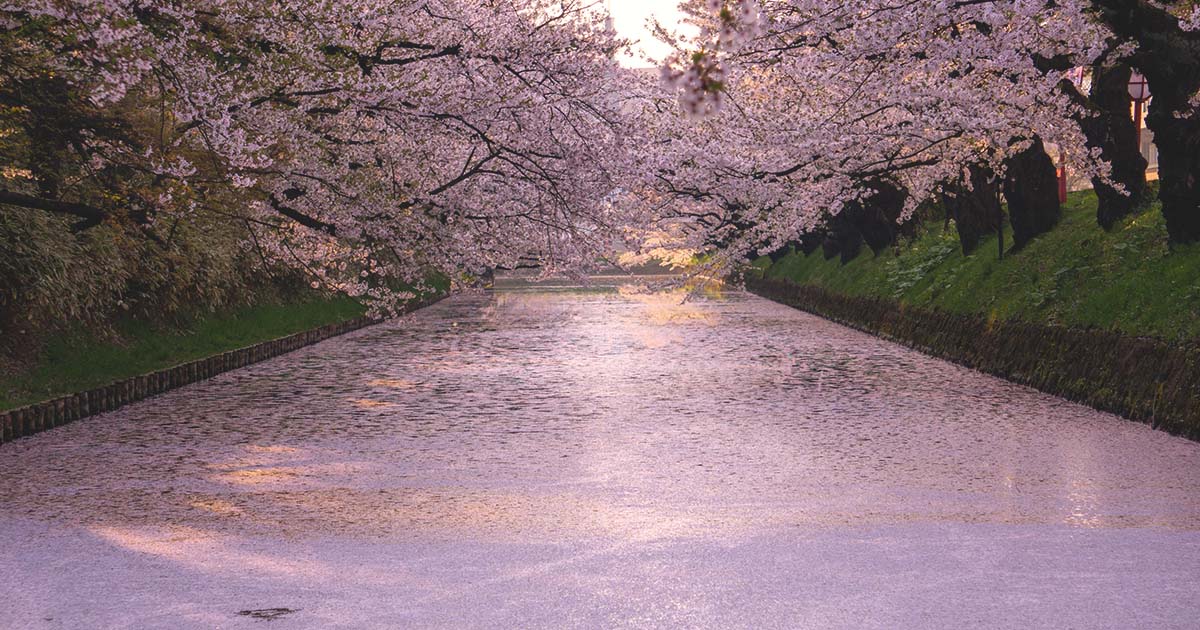
One especially memorable sight is the pond covered with fallen petals. The water turns a lovely pink, almost like a cherry blossom carpet, and it may feel as if the pond itself has disappeared.
When you see it, you can really feel how cherry blossoms continue to enchant us, even after they have fallen.
It was also selected by Facebook as one of the “World’s most beautiful places to visit before you die”.
Oirase Gorge 🌿
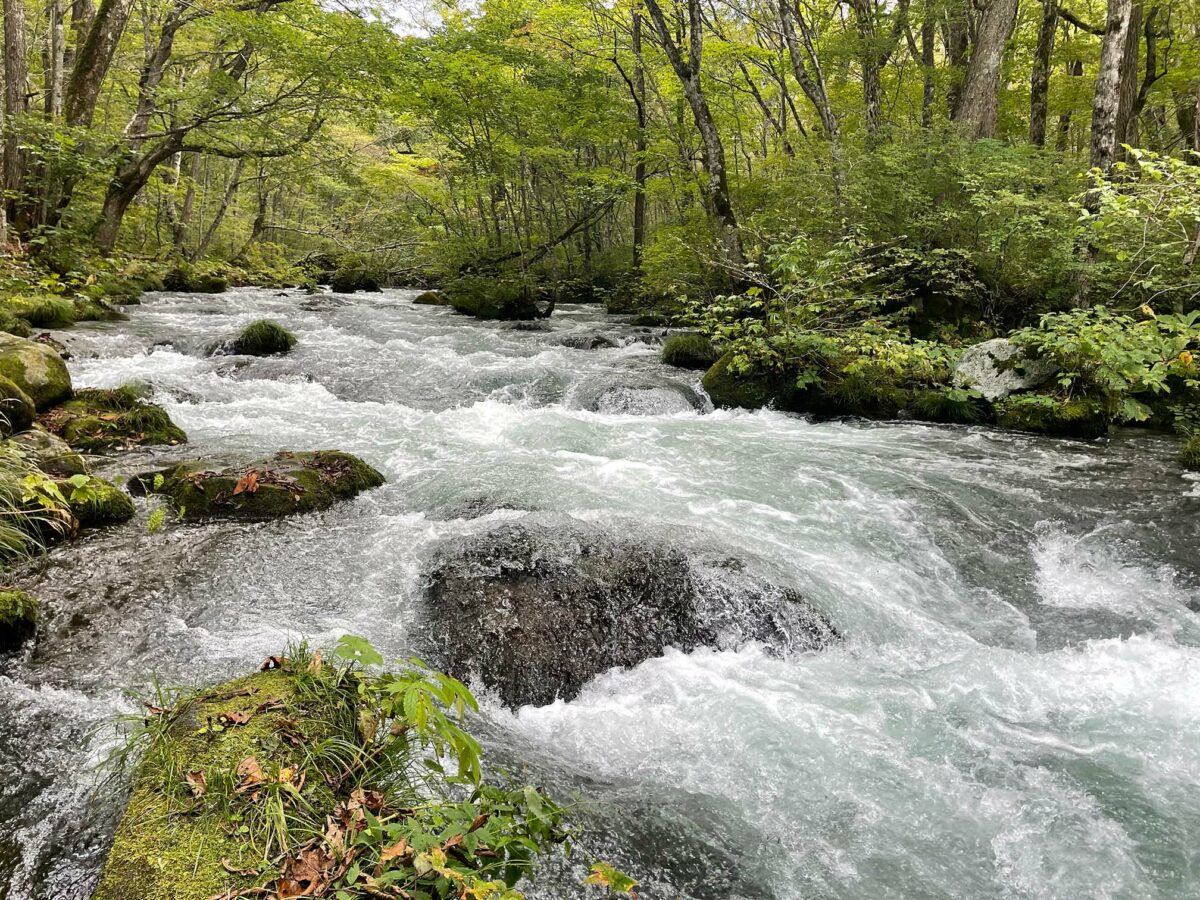
If you love peaceful nature walks, Oirase Gorge is an absolute must-see. This beautiful natural corridor is full of clear streams, soft moss-covered rocks, and plenty of waterfalls in all shapes and sizes—truly a relaxing and refreshing place to visit.
The gorge is so famous in Japan that it often shows up in ads, commercials, and even schoolbooks as a perfect example of the country’s rich and stunning nature. I still remember the feeling of wonder the moment I first laid eyes on it.

Stretching 14 kilometers, the gorge has well-kept walking paths that let you wander right alongside the babbling stream. You can listen to the soothing sound of the water, watch it flow, and get incredibly close to the natural beauty surrounding you.
There are wide, gentle waterfalls and tall, dramatic ones—but the most unforgettable for me was Choshi Otaki, a waterfall full of power and grace.

I only explored a part of the trail during my two-hour visit. If you want to take your time and explore the whole gorge slowly, you’ll want to set aside about five hours.
Even with just a short visit, though, I felt deeply connected to the natural beauty and left with a peaceful, happy heart. It’s definitely a place where nature’s healing magic is waiting for you.
Shirakami-sanchi 🌳
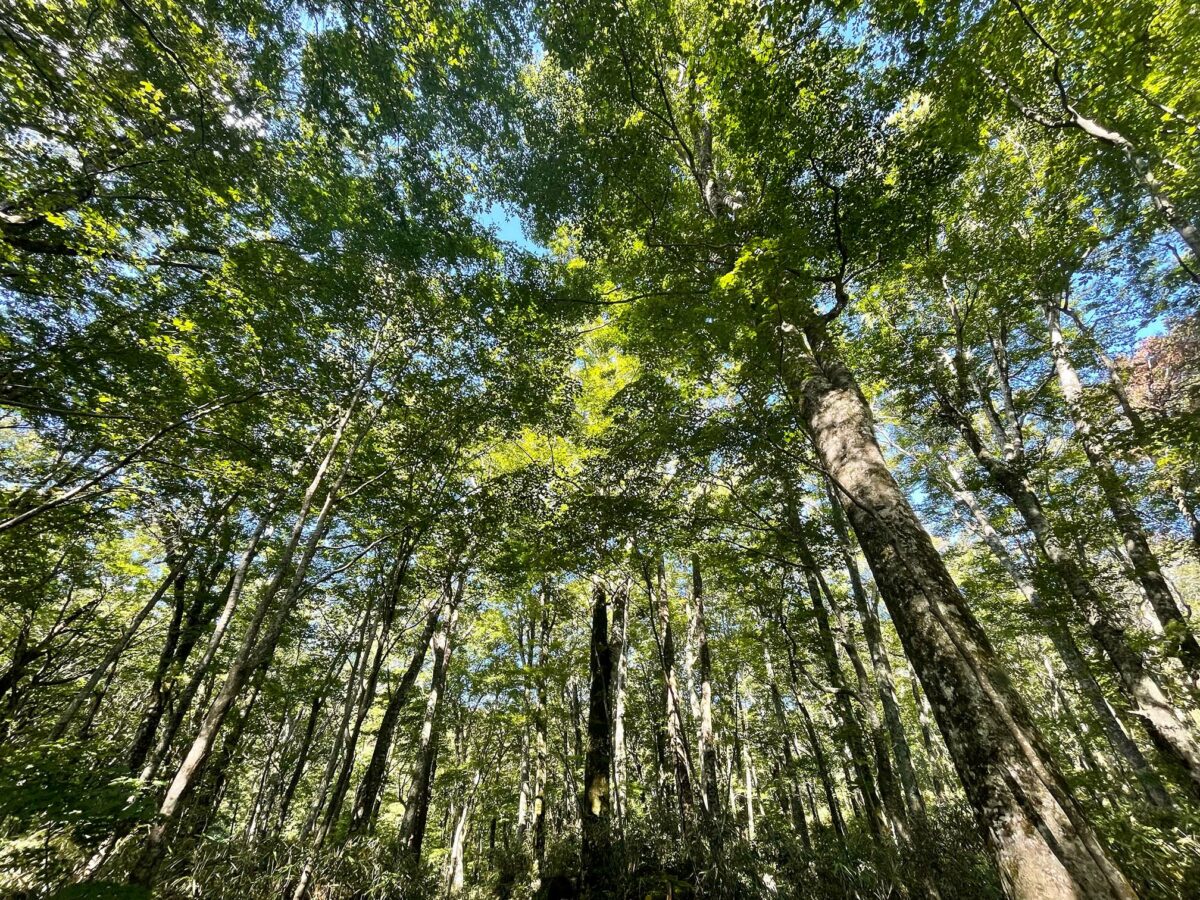
Shirakami-Sanchi is a UNESCO World Natural Heritage site known for its vast, largely untouched beech forests, offering a rare glimpse of truly wild nature. With its remarkably ancient ecosystem still preserved, it is regarded as an important model of nature on a global scale.

Well-maintained trails make the area enjoyable for everyone, from beginners to experienced hikers, allowing each visitor to explore the forest at their own pace. Whether you are looking for a peaceful walk, a refreshing forest bath, or simply a chance to experience the wonders of nature, Shirakami-Sanchi is the perfect place to recharge both body and mind.

Although it is not part of the World Natural Heritage core area, there is a place called Japan Canyon within Shirakami-Sanchi. With its striking white rock cliffs, it brings to mind the Grand Canyon in the United States. Such bright, dramatic cliff scenery is rare in Japan, and the view from the observation deck is well worth seeing.
Discovering Shirakami-Sanchi doesn’t stop here. Next, we’ll introduce some truly breathtaking sights you can experience within this remarkable region—be sure not to miss them.
Blue pond 🩵
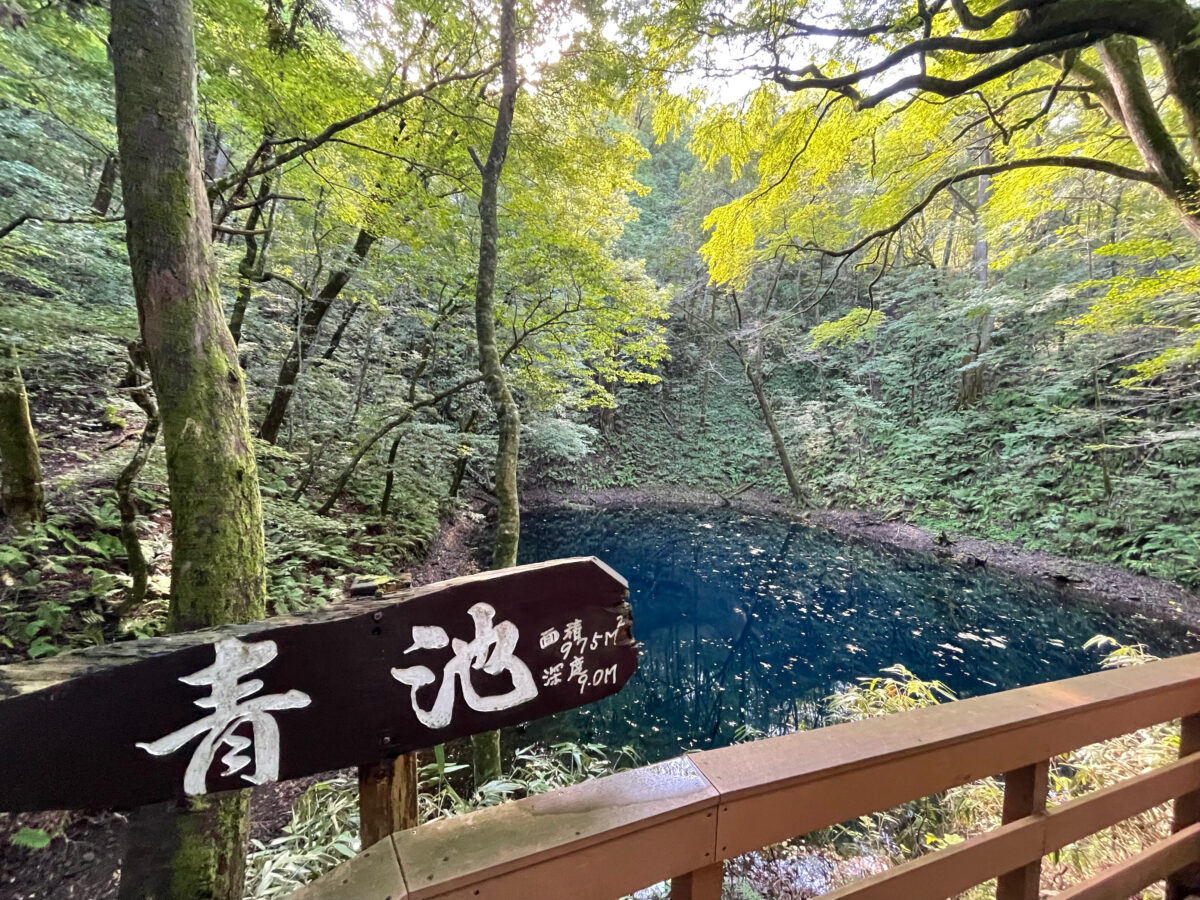
Shirakami-Sanchi is home to a number of crystal-clear ponds scattered throughout the forest. These ponds reflect the surrounding greenery like natural mirrors, creating a calm and almost magical atmosphere where you can really soak in the quiet beauty of nature.
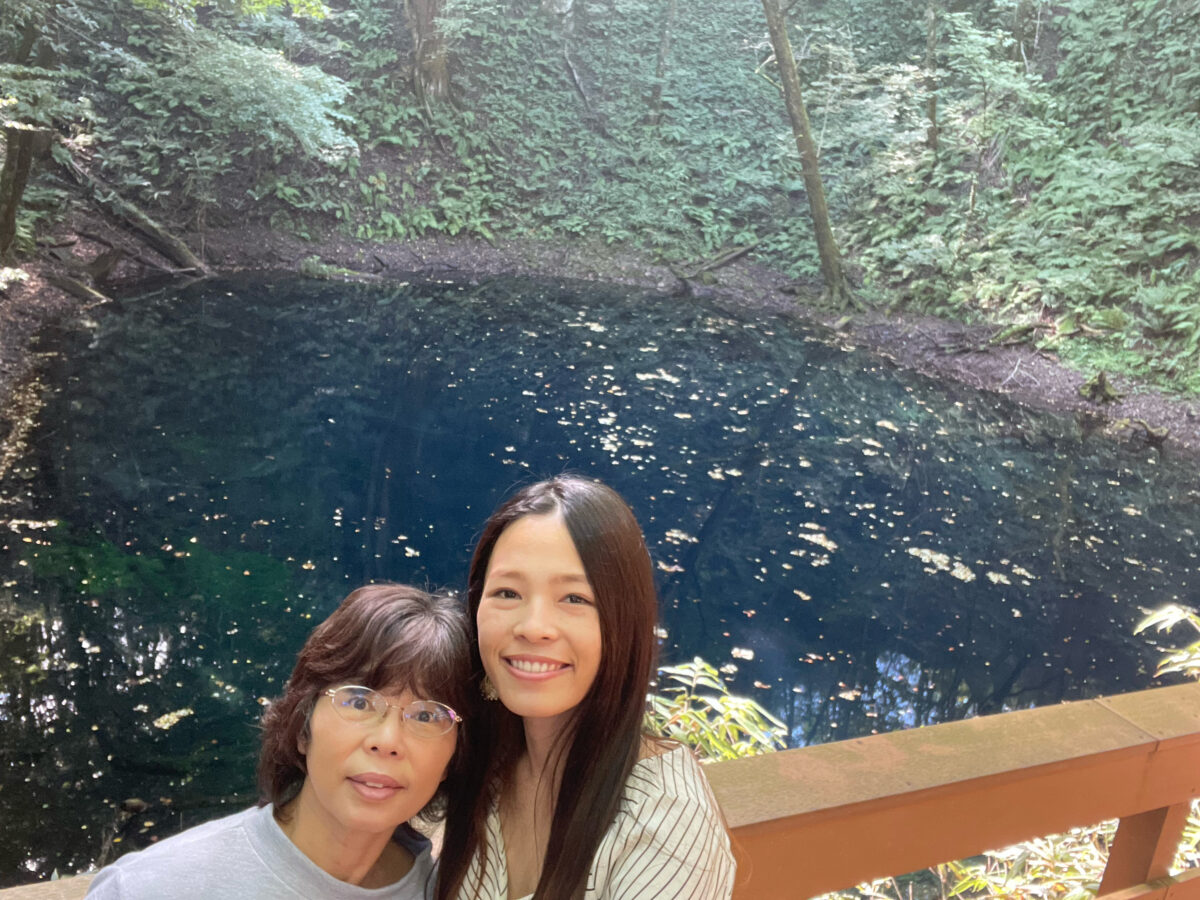
One spot you definitely won’t want to miss is Aoike(Blue Pond), a pond known for its stunning cobalt-blue color. Even though it’s about 9 meters deep, the water is so clear you can see all the way to the bottom. The color changes subtly depending on the sunlight and time of day, giving it a mysterious, ever-changing charm.
I had never seen such a beautifully blue pond before, and I ended up spending quite a while just standing quietly on the viewing deck, taking it all in.
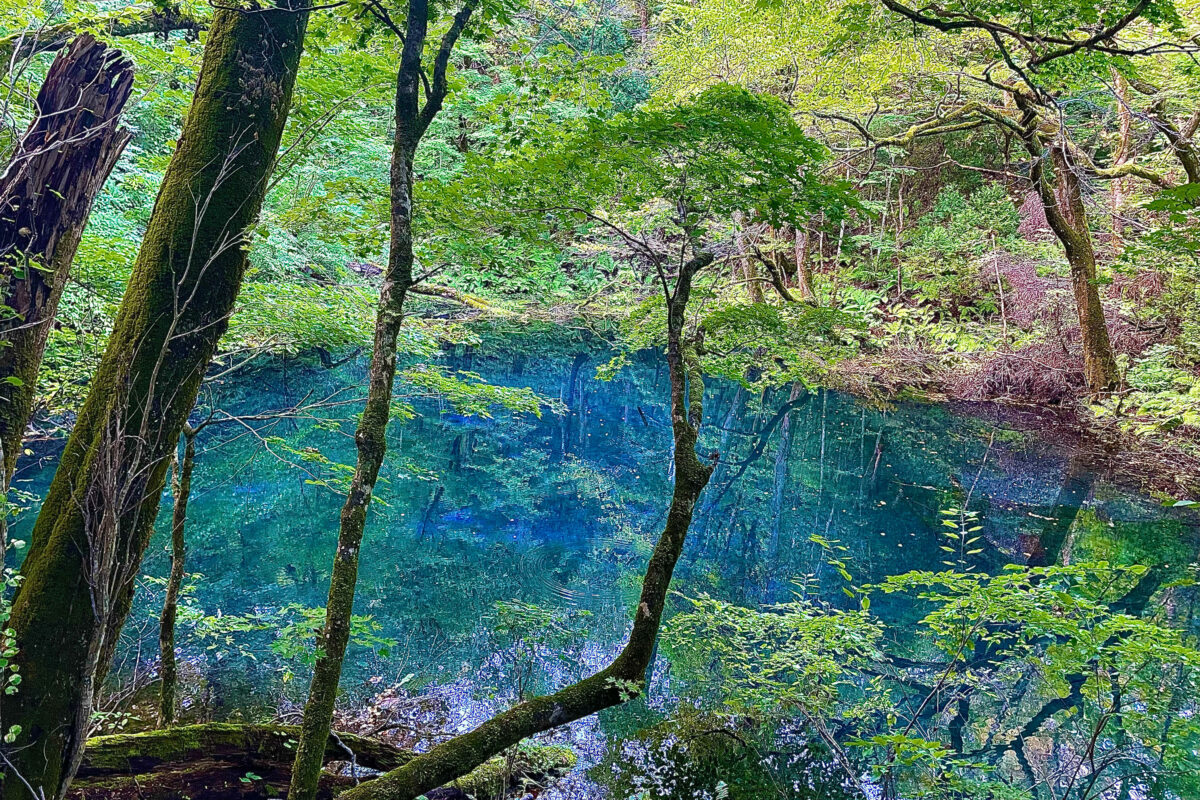
If you’re planning a visit, midday between May and September is said to be the best time. I went on a sunny afternoon in September and was lucky enough to see the pond in its vivid cobalt blue. You can still enjoy softer shades of blue on cloudy days, but if you can, try to go when it’s sunny—it really makes a difference.
Hotokegaura 🪨

Hotokegaura is a scenic coastal spot where pale greenish-white rock formations stretch for about two kilometers. These unique cliffs have been shaped by wind and waves over countless years, with some rising as high as 90 meters.

As you walk along the trail and look up, the towering rocks feel incredibly powerful—it’s the kind of view that makes you stop in your tracks. On sunny days, the contrast between the deep blue sea and the light-colored cliffs is especially striking. Come at sunset, and the rocks take on a warm golden glow, creating a truly magical atmosphere.

Hotokegaura is part of the Shimokita Hanto Quasi-National Park, and you can also take it in from a sightseeing boat. Seeing the cliffs from the water gives you a whole different perspective and an even stronger sense of their scale. It almost feels like stepping into another world.
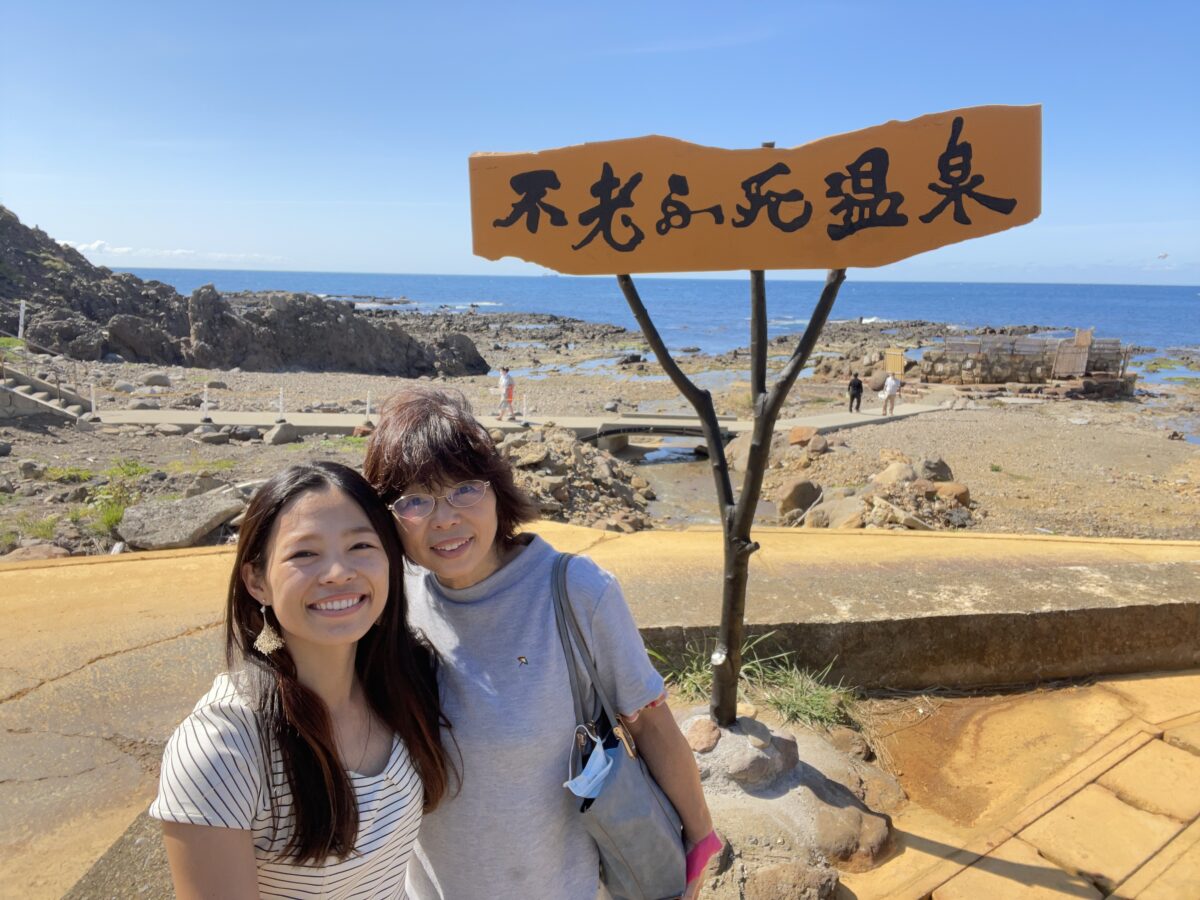
Furofushi Onsen ♨️
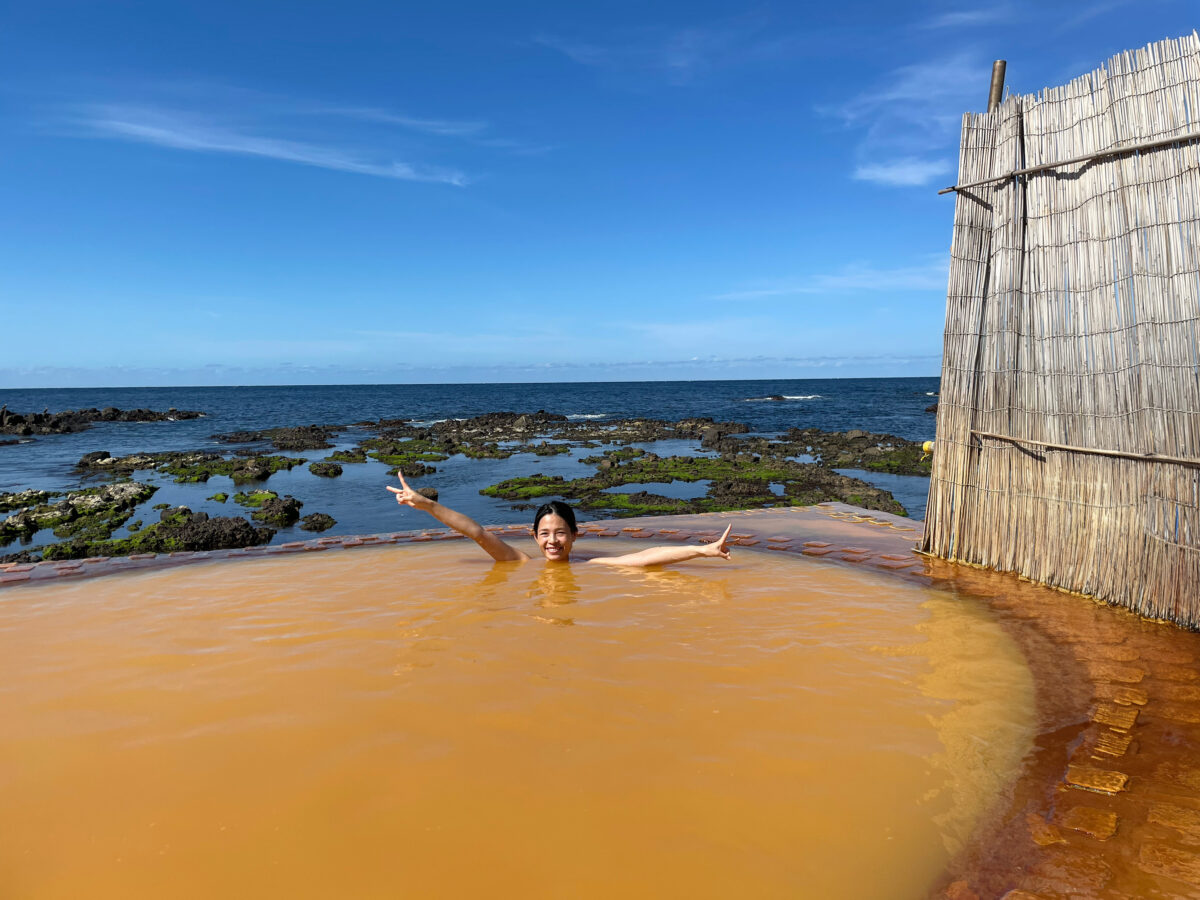
Japan has no shortage of hot springs, but this one stands out even among them. Set right along the sea, it’s an open-air bath where you can hear the waves, watch the horizon, and feel as if you’ve slipped into the ocean itself.
The name “Furofushi” means “ageless and immortal,” based on the idea that bathing here can help protect you from aging and illness. That alone already makes it sound like a place worth visiting, doesn’t it?
What makes this hot spring especially memorable is its reddish-brown water, which is rich in iron. The strong iron scent stayed with me the entire time I was soaking, and it was honestly the most intense iron smell I’ve ever experienced at a hot spring.
The water was also so cloudy that I couldn’t even see my own body while I was in it. So yes, that’s why I could feel perfectly comfortable including the bathing photo here.
This hot spring is also said to have antibacterial properties that help heal cuts and leave your skin feeling smooth. As a woman, I definitely took my time soaking and hoped to come away with softer, prettier skin.
Another thing that makes this place special is how close it is to the sea. When the waves are rough, it almost feels like they might splash right into the bath. With nothing blocking the view, you can relax in the hot spring while watching the sunset.
Since Shirakami-Sanchi, the World Natural Heritage site introduced on this page, is nearby, I highly recommend visiting both together.
Furukawa Market 🐟

The market’s signature dish is Nokkedon, and it’s much more than just a seafood bowl. Instead of receiving a set bowl, you get to build your own original one from scratch, choosing exactly the ingredients you want.

The process itself is part of the fun. First, you buy a ticket set for around 1,500 yen, then exchange the tickets for rice and your favorite toppings. Since each ingredient costs a different number of tickets, you’ll find yourself carefully weighing every choice as you build your bowl.
There were so many tempting options that I actually ended up buying more tickets. If you’re wondering what to try first, scallops are a must. Aomori is famous for them, and one especially unusual topping I found here was the sashimi made from the fringe around the scallop’s adductor muscle—a rare ingredient I had never seen anywhere else.(The white string-like in the next photo)

I was also drawn to the giant shrimp, and I couldn’t help noticing the oversized tamagoyaki displayed at every stall, even in a fish market. Apparently, its fluffy texture and gentle sweetness make it a perfect contrast to the seafood.
From choosing your toppings to eating the finished bowl, the whole experience is part of the appeal. It’s the kind of market visit that turns a simple meal into something memorable.
Takayama Inari Shrine ⛩️

When people talk about Senbon Torii(thousand of Torii), Fushimi Inari Shrine in Kyoto is usually the first place that comes to mind, and it’s fair to say it’s one of Japan’s most iconic sightseeing spots. But Takayama Inari Shrine is also famous for its vermilion torii gates, and the view is absolutely worth seeing.
As you walk along the approach, you’ll find about 2-meter-tall red torii gates winding like a dragon, with a pond nearby adding to the scenery. Looking down at it all from a slightly elevated spot was truly moving.

Since it was a sunny day, the sunlight made the rows of bright red gates shine beautifully. Counting how many torii gates you pass could be a fun way to enjoy the walk, too—after all, scenes like these many torii are incredibly rare in Japan because usually there is one Torii at the shrine.

Because this is an Inari shrine, it was originally worshipped as a place for abundant harvests and good food, but today many people visit to pray for business success. That’s why the image of Inari shrines has become strongly associated with prosperity.
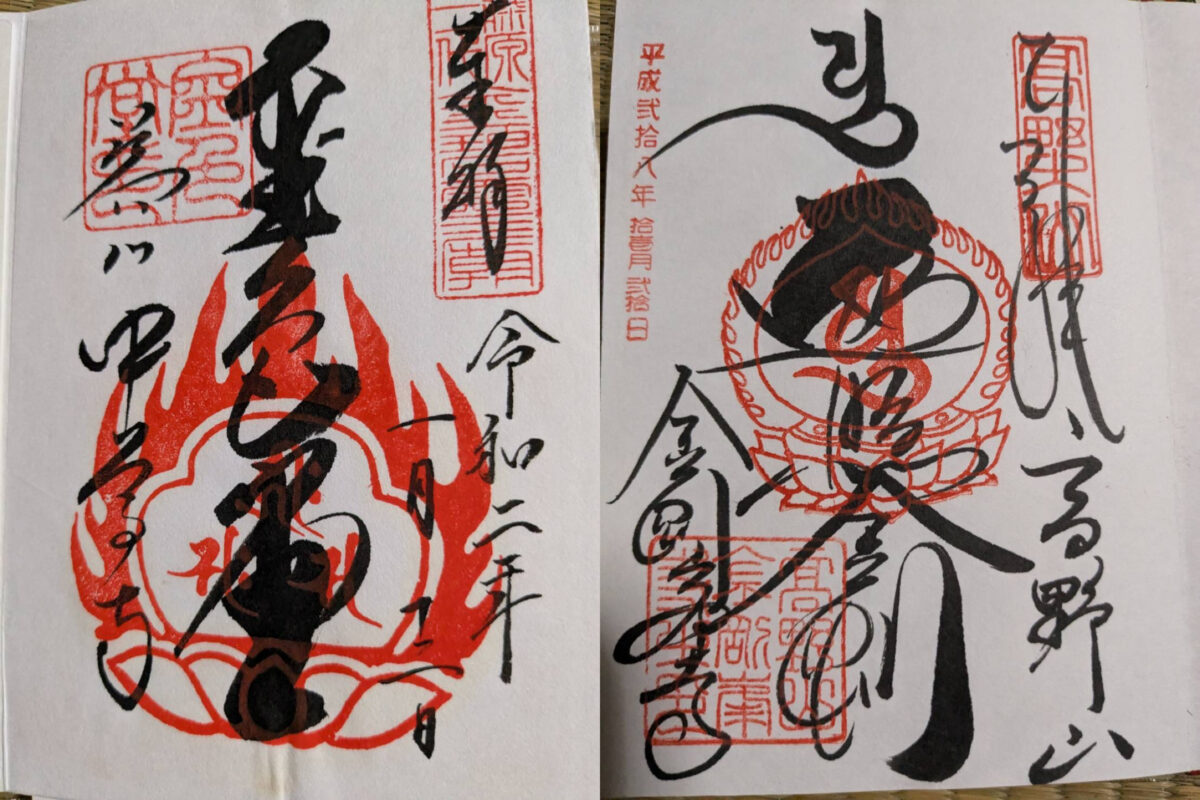
Have you heard of a goshuin? It’s a special stamp you receive at shrines and temples as a record of your visit and your connection with the sacred site.
I’m already a collector with more than 30 goshuin in my notebook. Looking back through them brings back memories of each trip, and I love how every shrine has its own design—some are simple and calligraphy-only, while others include beautiful decorative patterns.
One of my foreign friends even kept the goshuin they got in Japan inside their phone case. If you visit a shrine in Japan, I definitely recommend collecting them.
Tsuru no Mai Bridge

A striking feature of this 300-meter wooden bridge is its triple-arch design. Nearby, a mountain shaped much like Mt. Fuji rises in the background, creating a truly breathtaking scene with the bridge, lake, and mountain all in one view.

I visited twice, once in the evening and once in the morning, and both the reflection of the bridge on the lake and its silhouette in the sunset felt incredibly magical.
I’ve also heard that the scenery is especially beautiful when the cherry blossoms are in full bloom or when the area is covered in snow.
Oma 🐟

Oma is the northernmost town in the Tohoku region. The waters around this area are known for their rough currents, and the tuna raised here is famous as the “black diamond” for its exceptional quality. It’s prized not only for its rich fatty taste, but also for the perfect balance between its deep red meat and its natural sweetness.

I visited a casual seafood restaurant attached to a fish shop in the port town. To be honest, I’m not usually a big fan of tuna, but since I had come all the way to Oma, I felt like I had to try it. And I was completely blown away by how delicious it was. It really made me understand why this place is so famous for tuna.
I ordered a tuna rice bowl with both lean and fatty cuts. The fatty part was especially delicious, with the rich fat melting in my mouth.

I’ve heard that people in Europe and the U.S. tend to prefer lean tuna, and I was surprised to find that, during my time living abroad, fatty tuna was often sold at a lower price than lean tuna. If you’ve never had much experience with fatty tuna, I really recommend trying it in Japan—you may be amazed by how good it is.
If you come to Oma, eating tuna is a must.
Miso curry milk ramen 🍜

Aomori City’s soul food! When I first learned about this ramen, I honestly couldn’t believe my eyes—milk in ramen? At the same time, I also thought, “There’s no way this could taste good.”
Miso ramen can be found all over Japan, but adding milk to it is something I never would have imagined. I kept wondering how anyone came up with such an idea.
Still, my curiosity got the better of me, and since it was said to be a popular dish, I couldn’t resist trying it at a restaurant called Ajino Sapporo Onishi.
The milk gently rounds out the curry-like spices, making the flavor smooth and mellow, with no spiciness at all. It’s such an unexpected combination, but it was surprisingly delicious—and definitely a ramen worth trying at least once.
Akita
Tazawa Lake
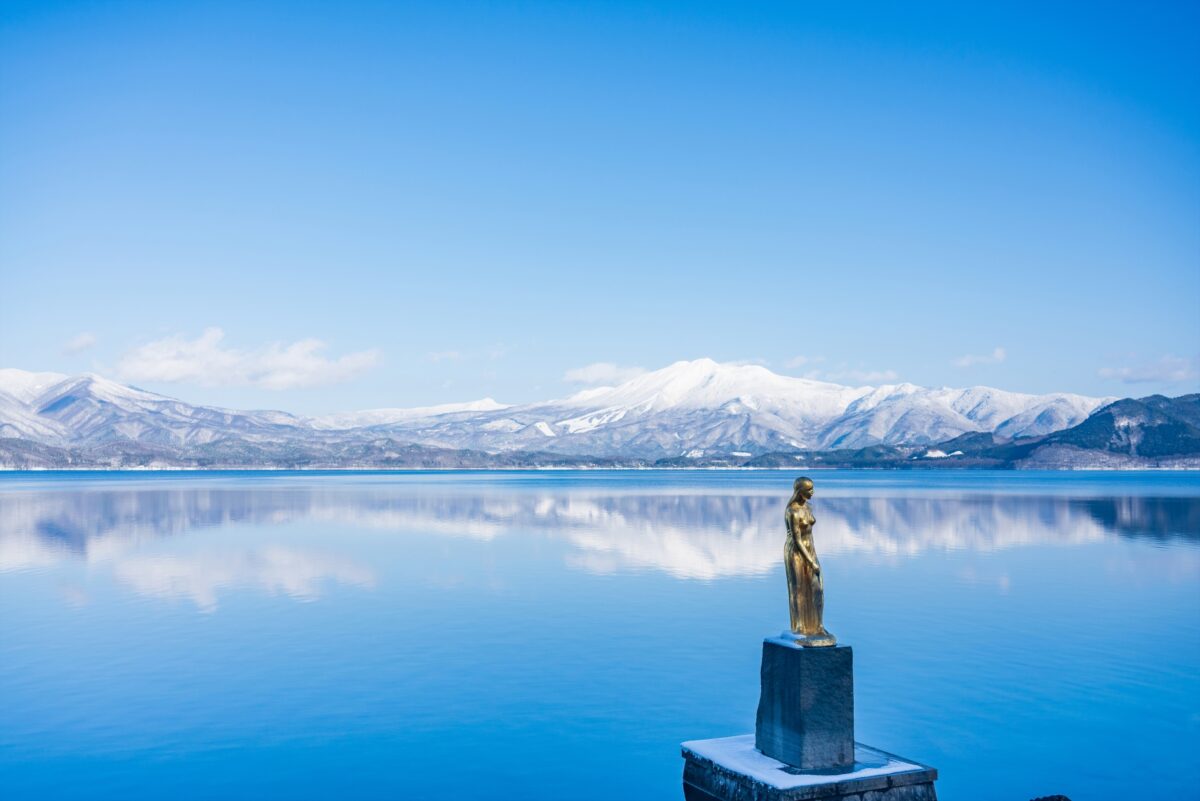
Tazawa Lake, Japan’s deepest lake plunging to 423 meters, mesmerizes with its crystal-clear, cobalt-blue waters sparkling under sunny skies.
Right by the shore, the golden “Tatsuko Statue” catches every eye. It’s inspired by the legend of a stunning beauty named Tatsuko, who prayed to the dragon god for eternal youth, only to transform into a dragon and dive into the lake.
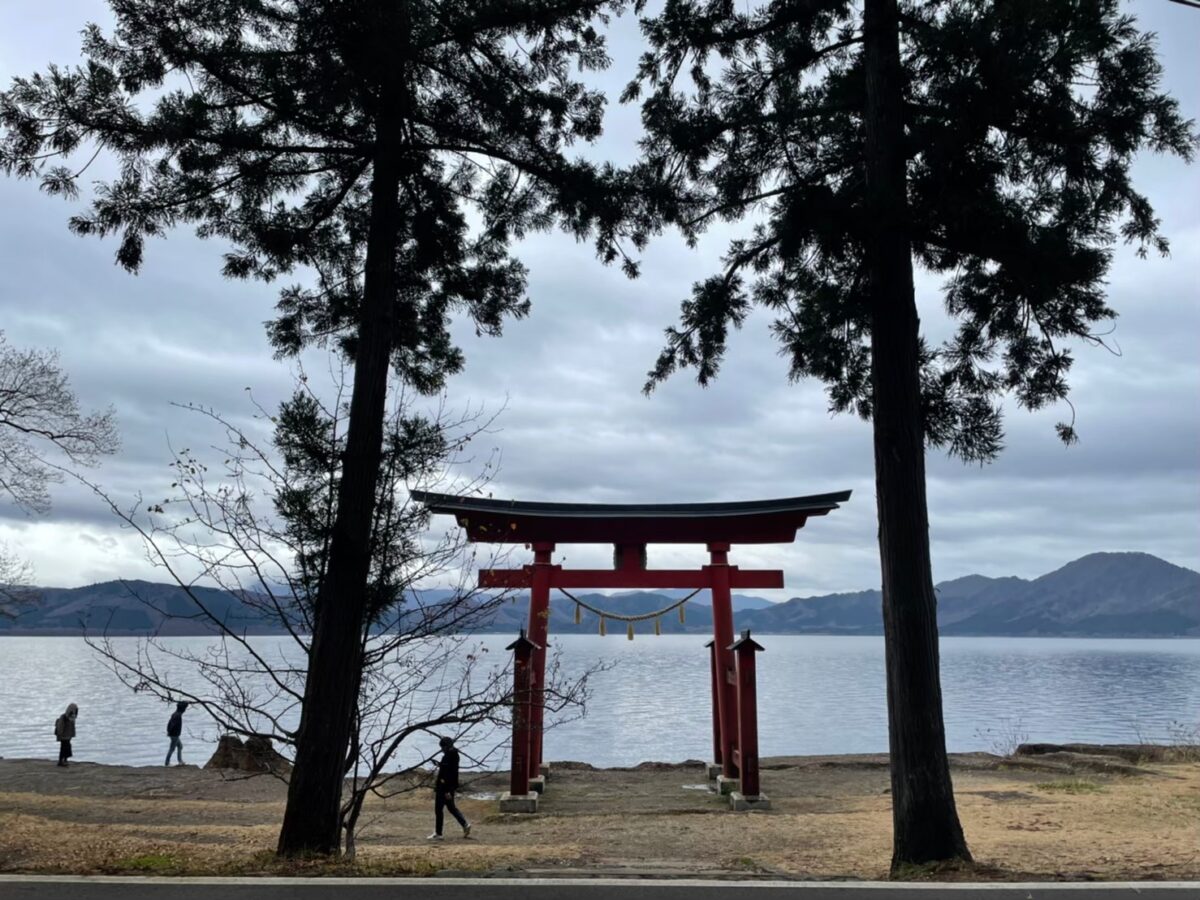
Right by Tazawa Lake stands a striking red torii gate—that’s Goza-no-Ishi Shrine! The vibrant vermilion gate popping against the lakeside scenery made me slam on the brakes and hop out for a closer look.
Tied to the stunning beauty Tatsuko we just mentioned, it’s said to bless you with lasting beauty and romance—so ladies, this is your spot! Go visit and make a wish!!

While driving around Tazawa Lake, I spotted a souvenir shop right along the road and pulled over to browse. I glad I did—beyond the typical gifts, it had some super special surprises that made stopping a total win!
There, mingling with visitors, was a massive, world-famous Akita dog and a few other friendly animals. And get this—you can pet them and snap selfies together for just 100 yen? Total steal!
Even as a local living in Japan, spotting an Akita dog is rare for me. This gentle giant was so calm and adorably cuddly despite its huge size.
Nyuto Onsen ♨️
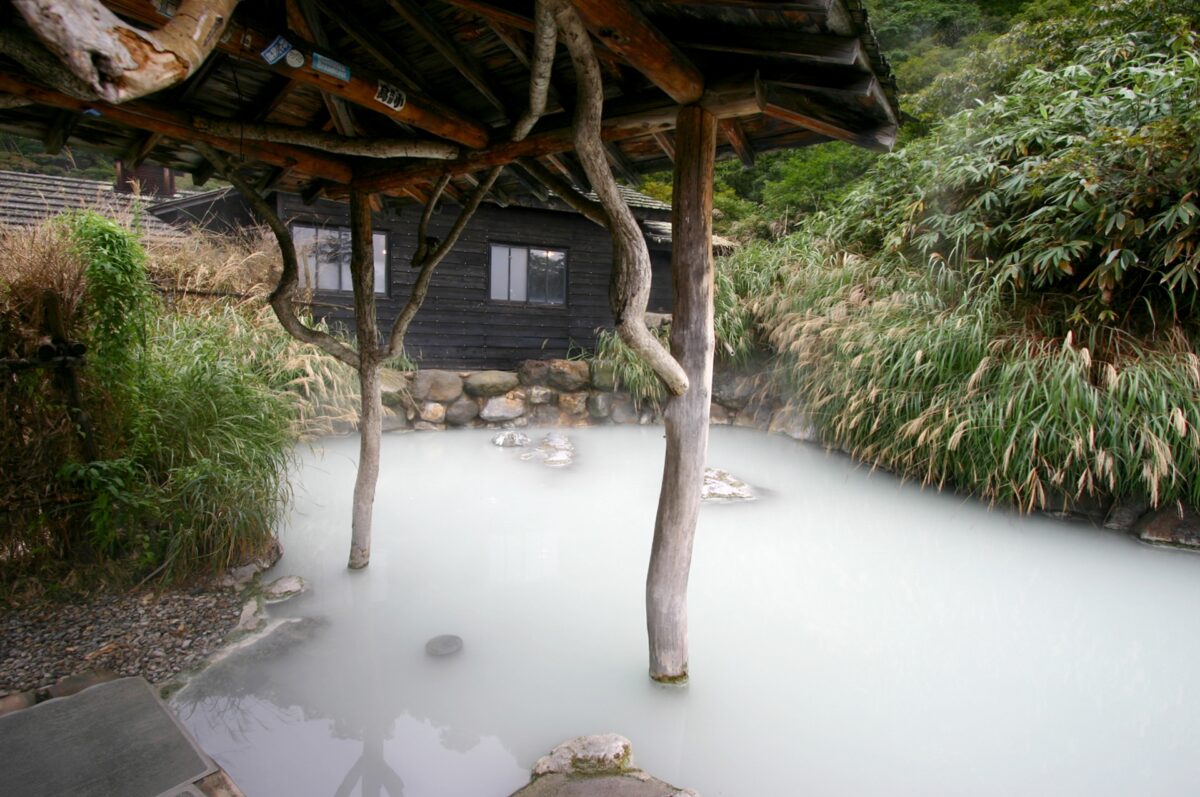
This hot spring destination is renowned for its four unique spring types, and the historic Tsuru no Yu—the oldest of them all—features stunning milky-white waters.
In the open-air bath, hot springs bubble up right at your feet—what a rare treat! Loaded with sulfur, it works wonders for your skin, leaving it beautifully moisturized while you soak.
For foreigners, it’s not just soaking in a bathtub—bathing outdoors in hot springs is a truly rare experience! Open-air baths offer incredible freedom, letting you breathe fresh air and feel utterly refreshed. Highly recommended!
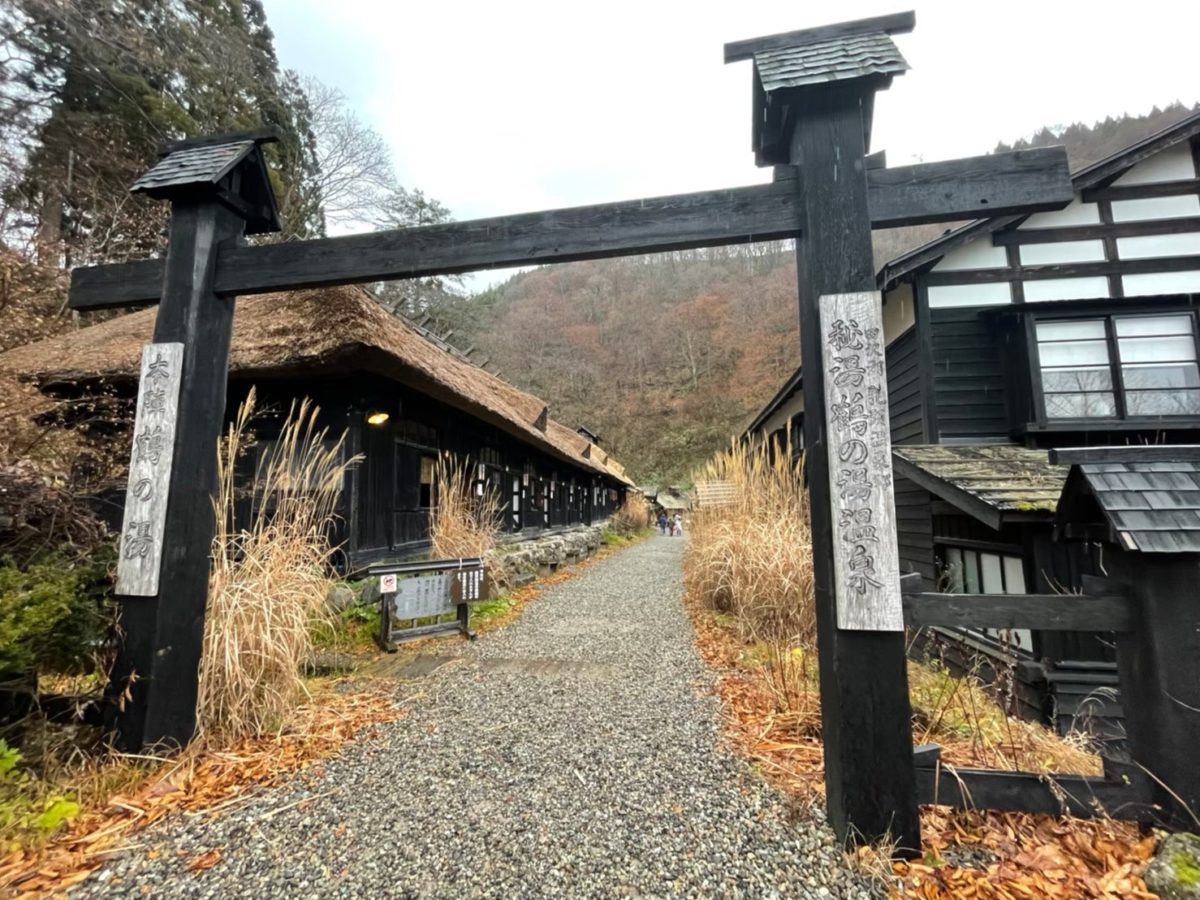
By the way, this spot has a popular mixed-gender bath where men and women soak together—a classic Japanese experience! There’s also a women-only option, but trying the mixed bath could be a fun, authentic adventure.
The milky-white waters ensure nothing shows through, and you can move around freely while staying submerged—no need to worry. I was surprised by how many women were enjoying it, way more than expected!
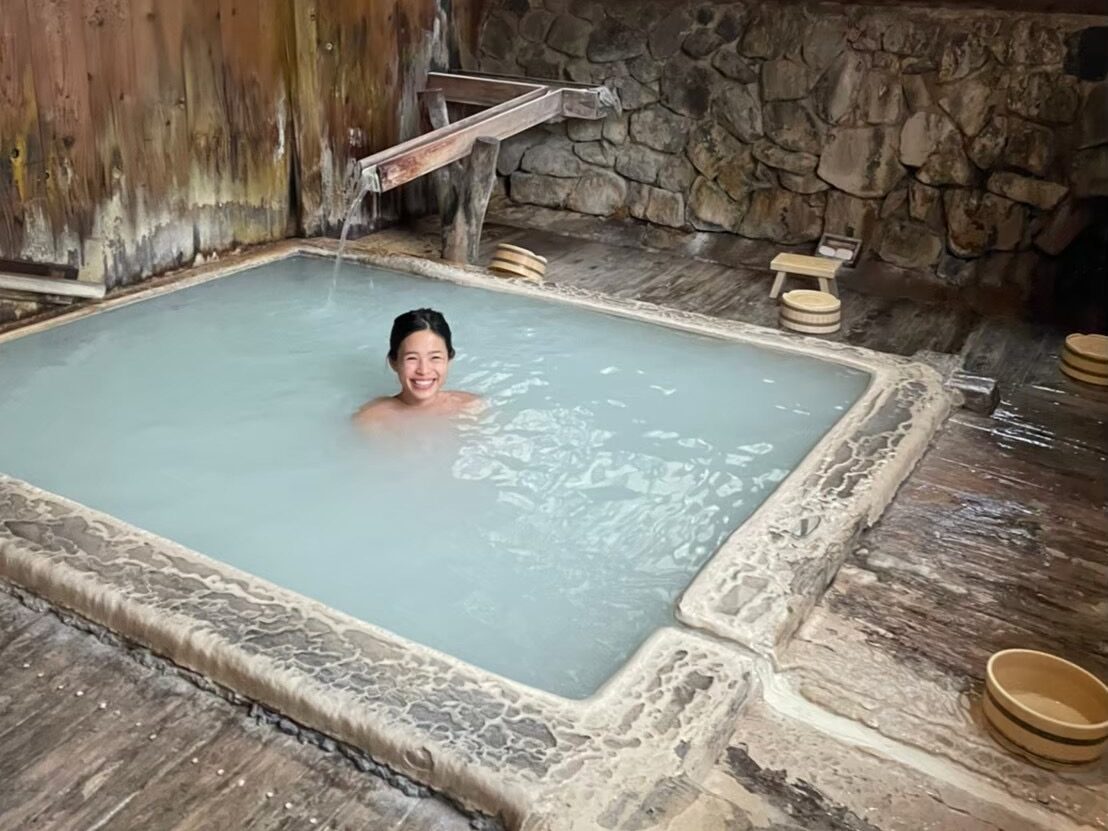
I also tried the small women’s-only indoor bath. Nestled in a wooden hut that’s far from fancy, but that’s exactly what gave it such a rich sense of history—I absolutely loved it!
Kamakura Snow House Festival ❄️
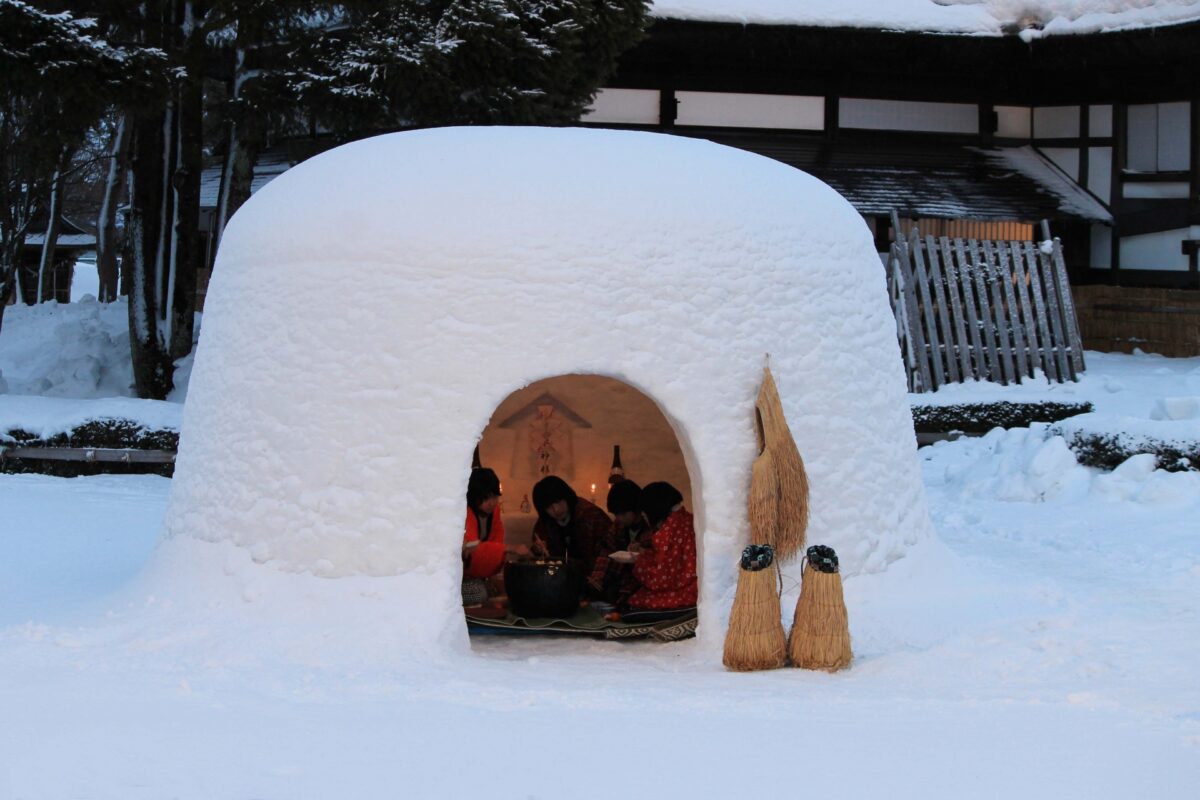
Snow lanterns called “kamakura”—ever heard of them? Think igloos from North America or Nordic snow hotels, but Japan’s kamakura are different: cozy little homes carved into piled-up snow.
From kids’ playful mini versions in winter backyards to massive, legit ones famous here in Akita Prefecture. Inside the big ones, you hang out with friends or share family time. Less about “survival shelter,” more about pure snow fun!
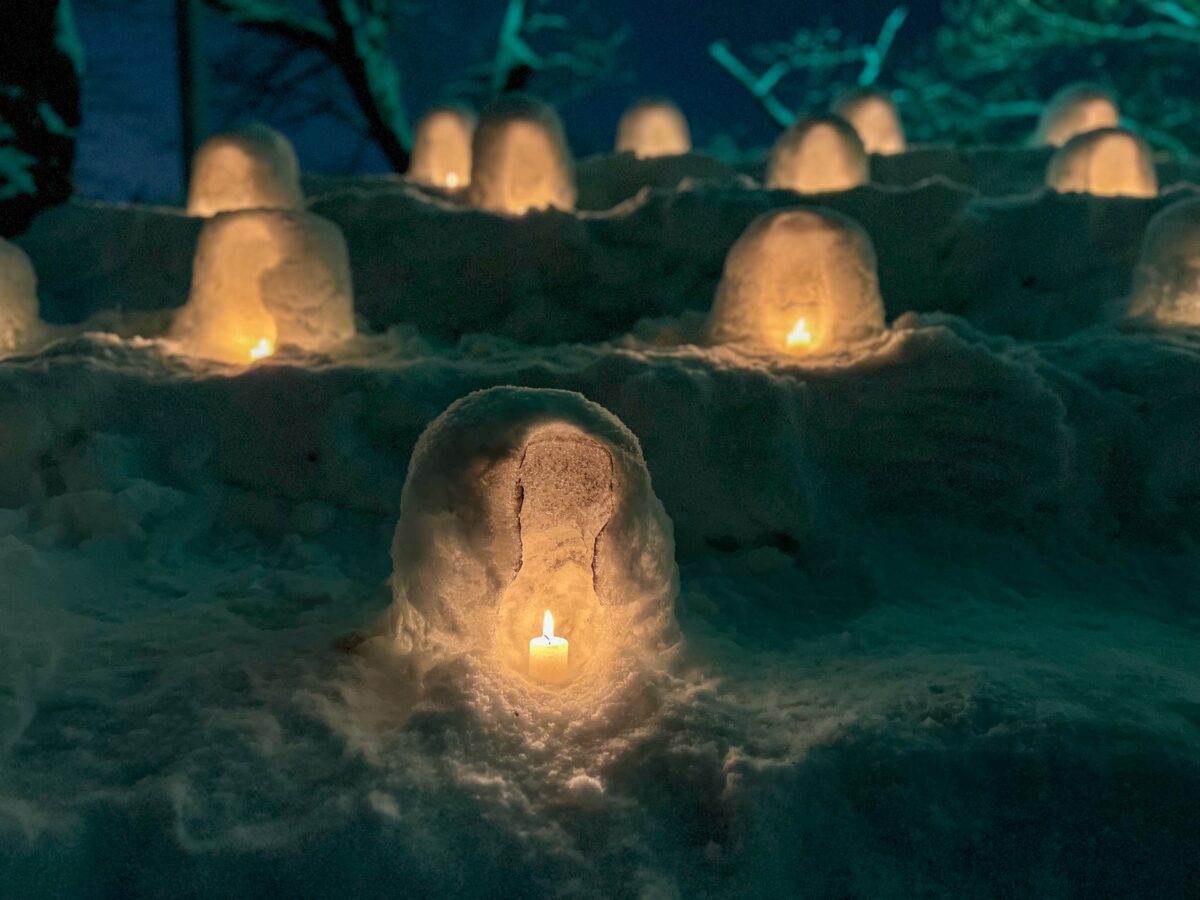
In Akita every February, they craft hundreds of tiny kamakura and light candles inside—a magical, dreamlike glow you’ll never forget. Perfect for foreigners craving authentic Japanese winter vibes!
Iwate
Chusonji Temple’s Konjikido Hall 🙏
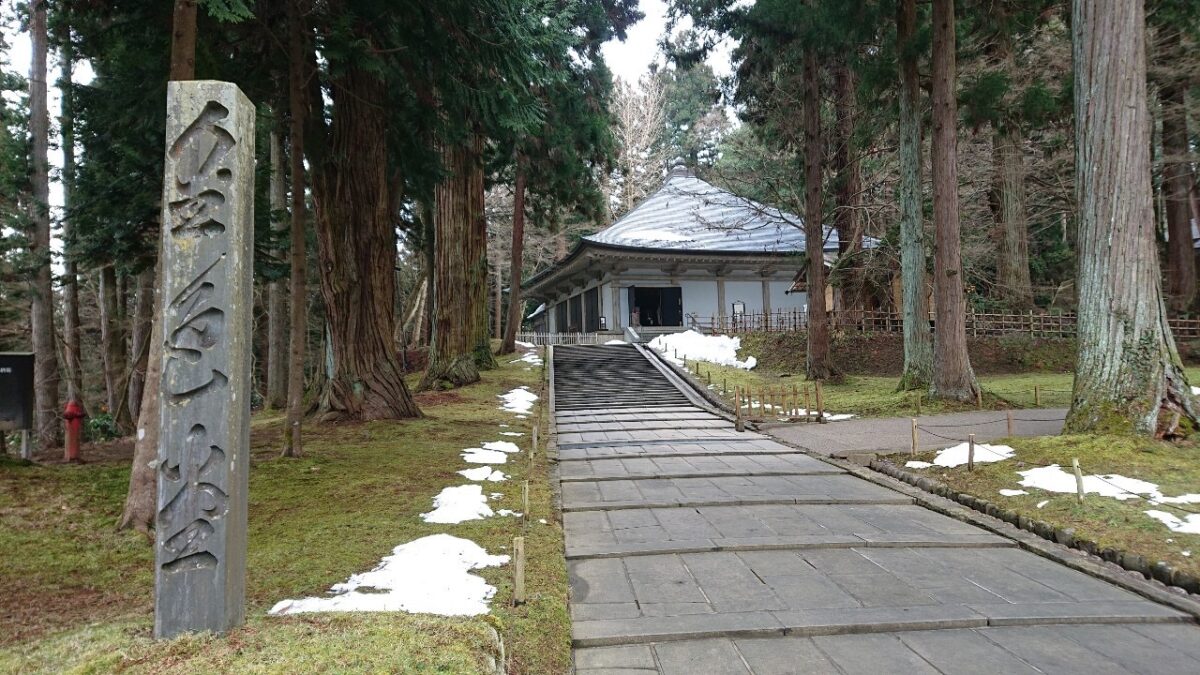
Chusonji Temple’s Konjikido Hall, a UNESCO World Heritage golden pavilion, stuns with gold leaf covering both inside and out—pure awe!
Built in 1124, it miraculously preserves nearly original architecture, packed with intricate carvings and decorations showcasing peak Japanese artistry. The glow aims to recreate the Pure Land paradise—a blissful, suffering-free realm of compassion and peace.
Towering cedars surround it, blending serene nature with history in a truly special vibe. The goshuin stamp I got here? Coolest one in my collection by far—grab it for 300 yen as your Chusonji souvenir!
Miracle Pine Tree 🌲
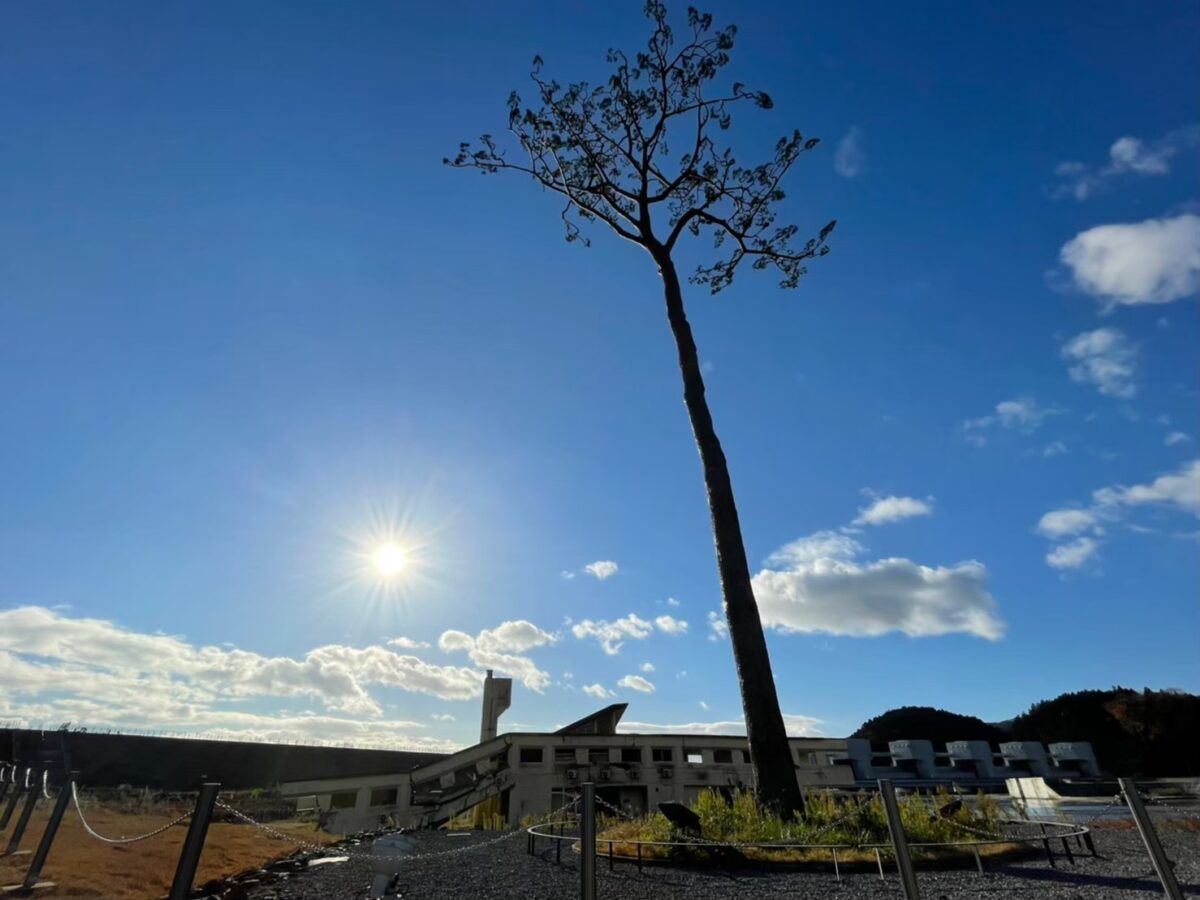
The Great East Japan Earthquake of 2011 is infamous worldwide. Amid the tsunami that swept away 70,000 pine trees in this area, this single “Miracle Pine” survived against all odds.
Standing as a beacon of hope and resilience, it’s preserved today as the “Symbol of Recovery.”
Standing right beneath it, I felt an inexplicable, mysterious power—and it looked unshakeably strong.
Tsunami Heritage Museums

In the Tohoku disaster zone, several Tsunami Heritage Museums dot the landscape—one sits right next to the famous “Miracle Pine” we mentioned.
It features videos compiling the disaster’s events and survivor testimonies, displays of tsunami-destroyed artifacts and photos, plus clear timelines of the recovery journey.
I’ve visited twice, spending about 3 hours poring over exhibits and stories. Though I only watched it unfold on TV news back then, the raw reality here hit harder—truly grasping the terror of the tsunami.
For foreign visitors from quake-free places, this is a must: learn about earthquakes and tsunamis firsthand.
Wanko Soba
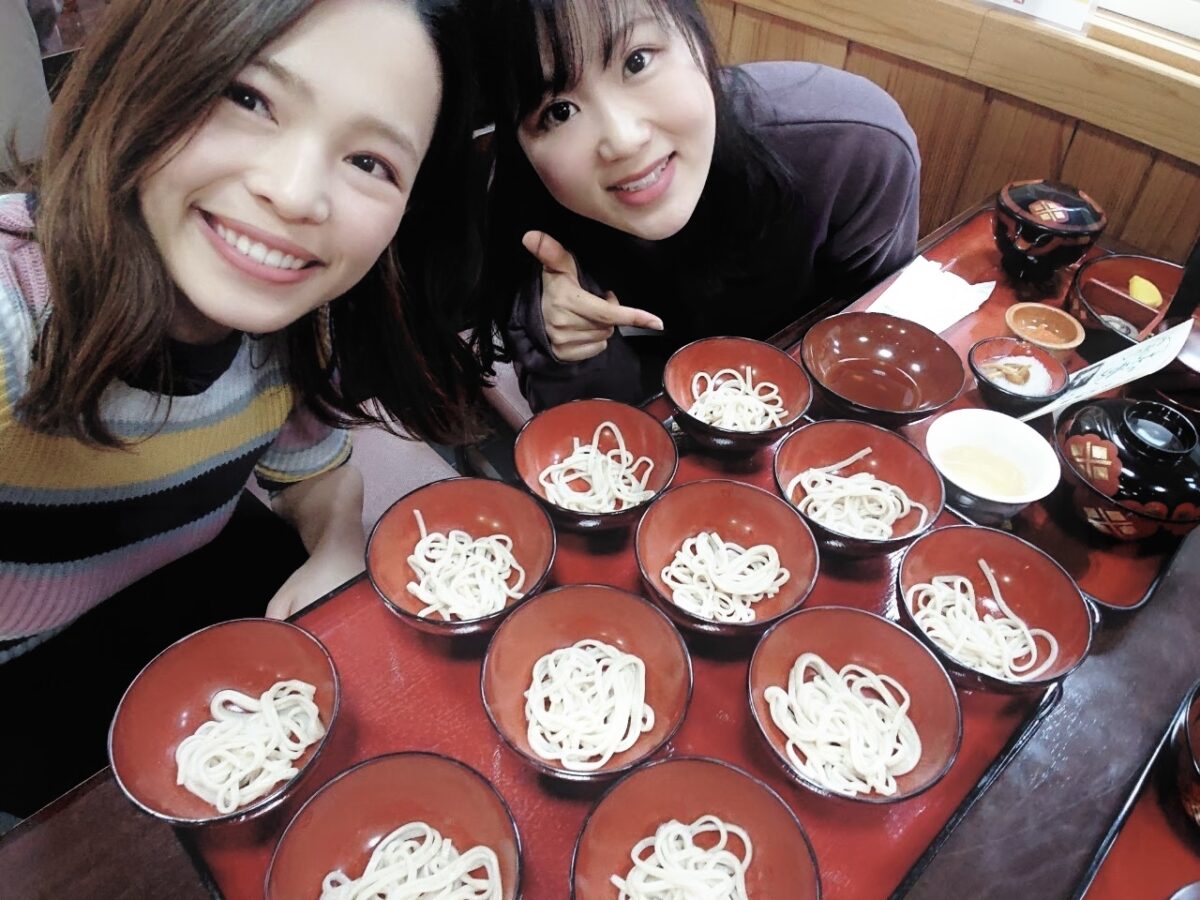
Wanko soba, Iwate’s quirky food sensation, draws crowds from Japan and abroad. What’s unique? Instead of a single bowl, staff keep refilling your tiny soba cup with bite-sized portions—nonstop!
It’s said 15 cups equal one serving, but some devour 100+! Rooted in “omotenashi” hospitality, serving small batches encourages hearty eating.
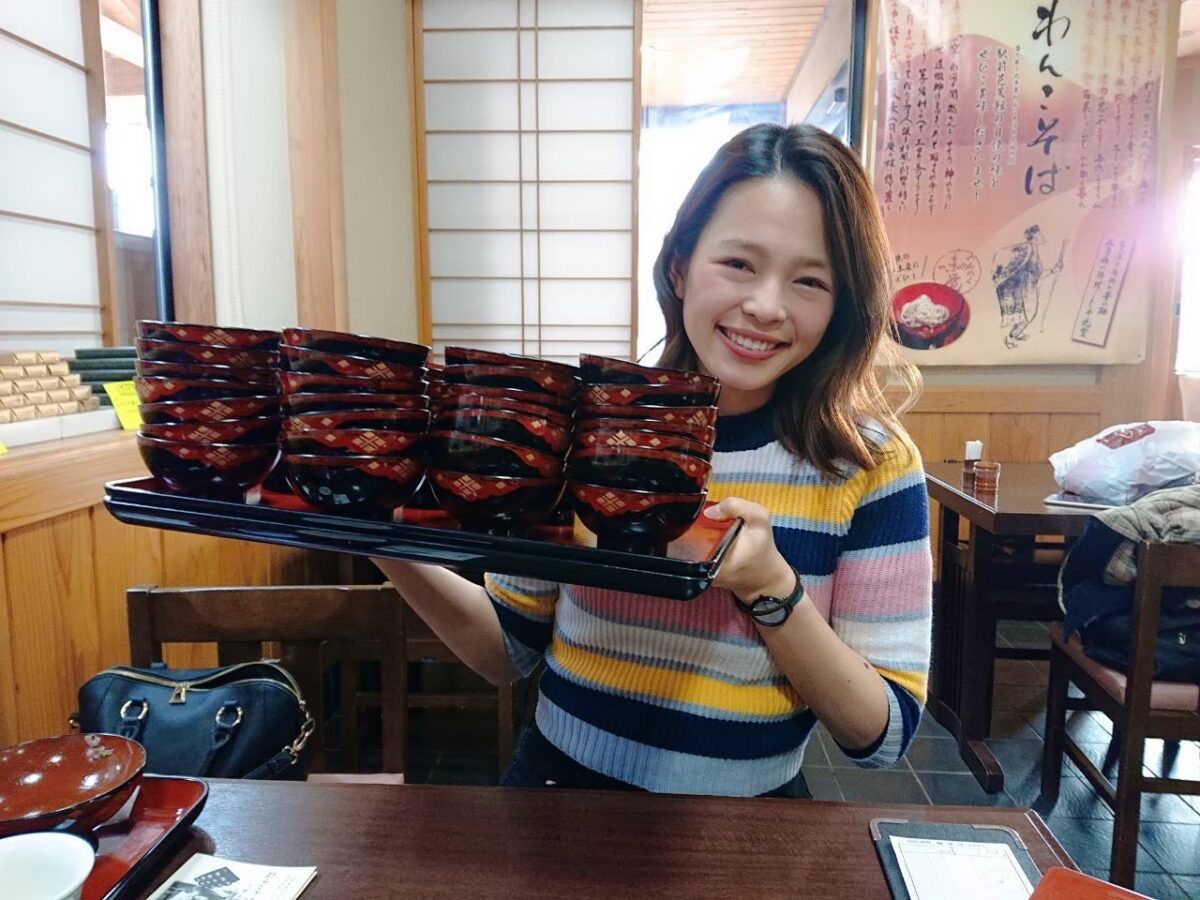
On my way back from Chusonji Temple, I hit a soba spot with a self-serve twist: 24 mini bowls to grab at will, plus wasabi, dashi broth, nori, and toppings galore. Customizing flavors while chowing down was pure fun!
Yamagata
Ginzan Onsen ♨️
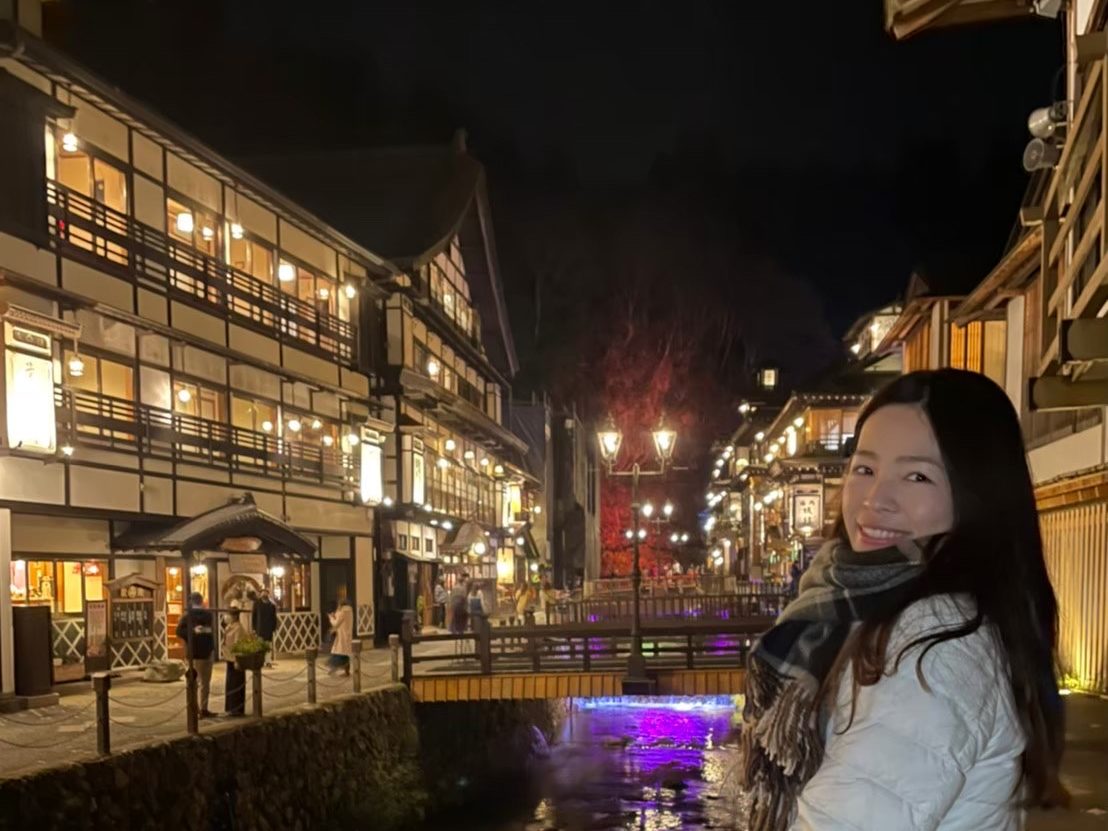
Ginzan Onsen is the number one place I’d recommend among all the many hot spring destinations I’ve visited in Japan. Ginzan Onsen’s star attraction? Its insanely photogenic streets! One ryokan here even inspired the bathhouse in the global hit “Spirited Away.”
A river runs through the center, flanked by wooden inns built over 100 years ago—no ugly power lines or poles anywhere. It’s pure nostalgia, like time-traveling to old Japan!
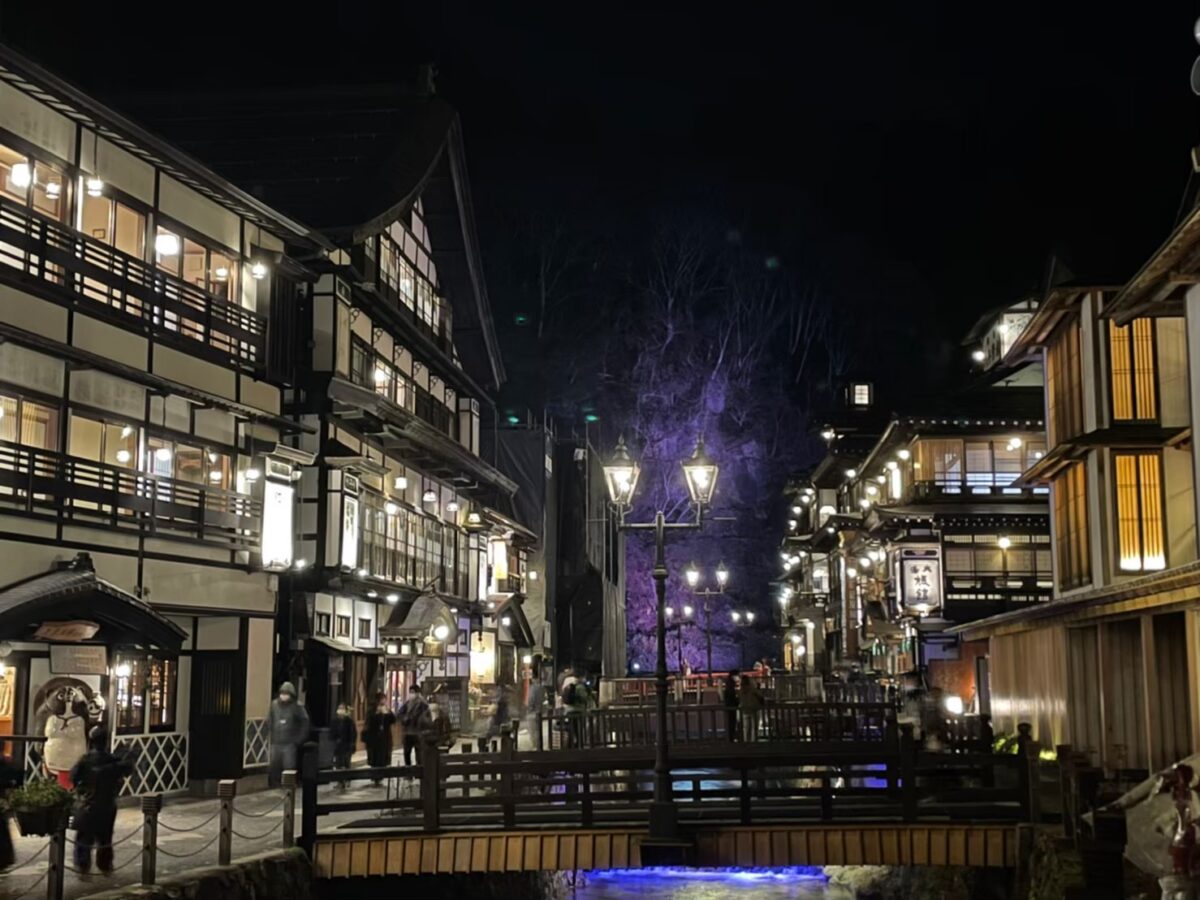
I visited this hot spring town at night, where warm, hazy lights softly illuminate the pedestrian-only streets, fostering a deeply tranquil vibe. Guests wandering in yukata add such a picturesque, timeless charm to the scene.
A free footbath lines the street—dipping your feet instantly warms your whole body, a reason Japanese folks adore them. Amid nostalgic scenery with the river’s gentle murmur, that footbath time became pure, effortless relaxation.
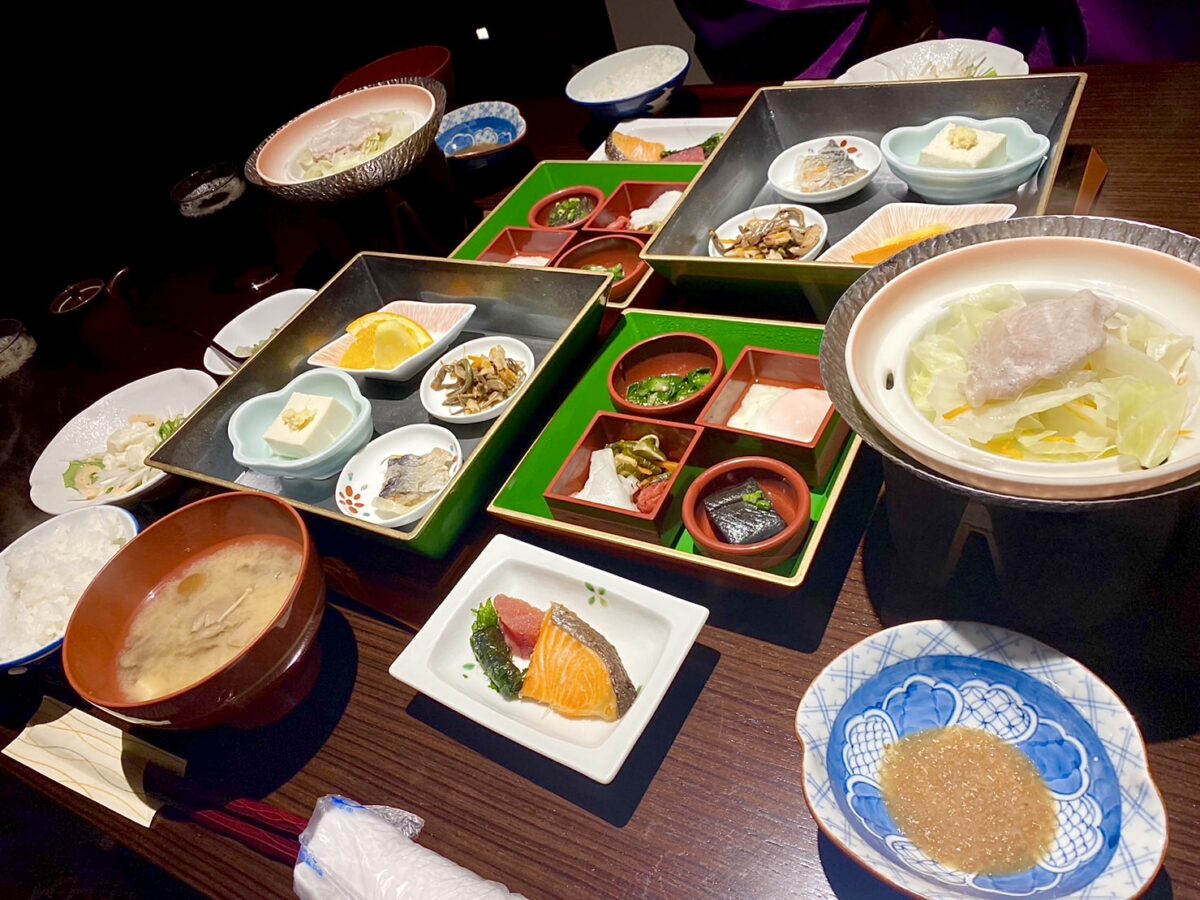
Ginzan Onsen is especially popular in winter, making ryokan reservations notoriously tough to snag. If you’re planning a winter trip, book immediately! Most ryokans offer stay-and-meal packages featuring delicious local cuisine.
Zao
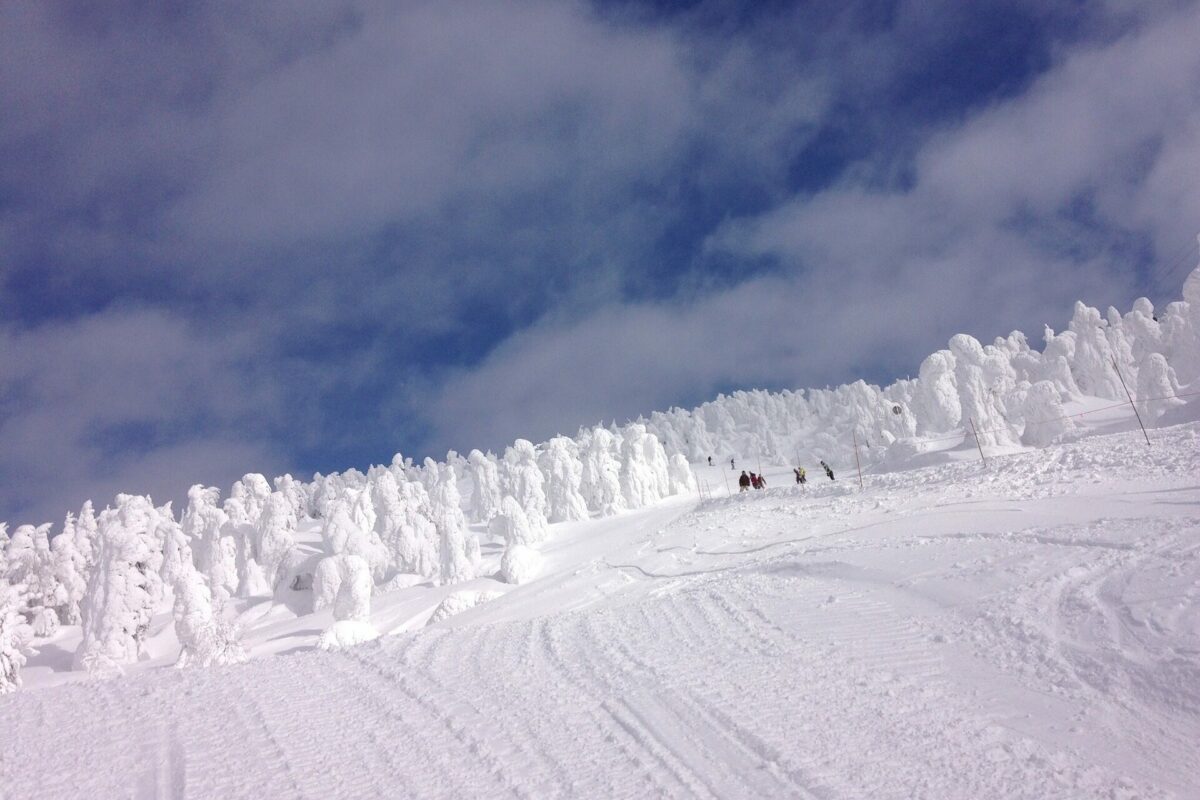
Zao is one of Japan’s top travel destinations, known for its magnificent volcanic landscape, beautiful seasonal scenery, outdoor activities, and hot spring culture.
It is especially famous for its winter ice monsters, known as juhyo. These striking formations are made when frozen mist and snow cling to the trees and trunks, gradually building up into icy shapes. Because they grow differently depending on the wind, they never look perfectly straight—instead, they take on strange and fascinating forms, earning them the nickname “snow monsters.”
The best time to see them is from late December to February. You can enjoy them while skiing or snowboarding, and there are also guided tours and ropeway rides that let you take in the view from above.
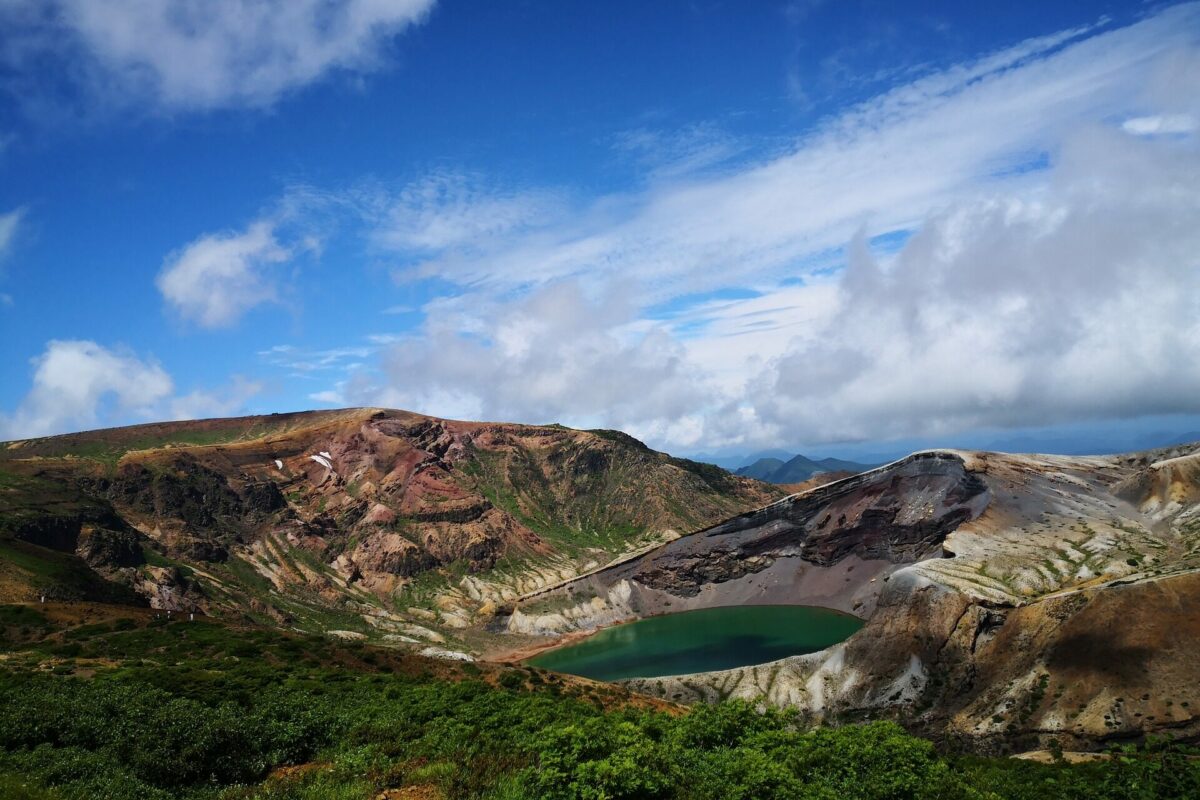
From spring to fall, vibrant new leaves, alpine blooms, and blazing fall foliage transform the mountains, letting hikers and climbers soak in nature’s living rhythm.
s the breathtaking emerald-green crater lake Okama—a true volcanic gem. You might catch whiffs of sulfur in the air, letting you feel the mountain’s power right there beside you.
The Okama area is a heavy snow zone, so road access by car is strictly seasonal—check ahead if you’re driving up.
Cold ramen 🍜
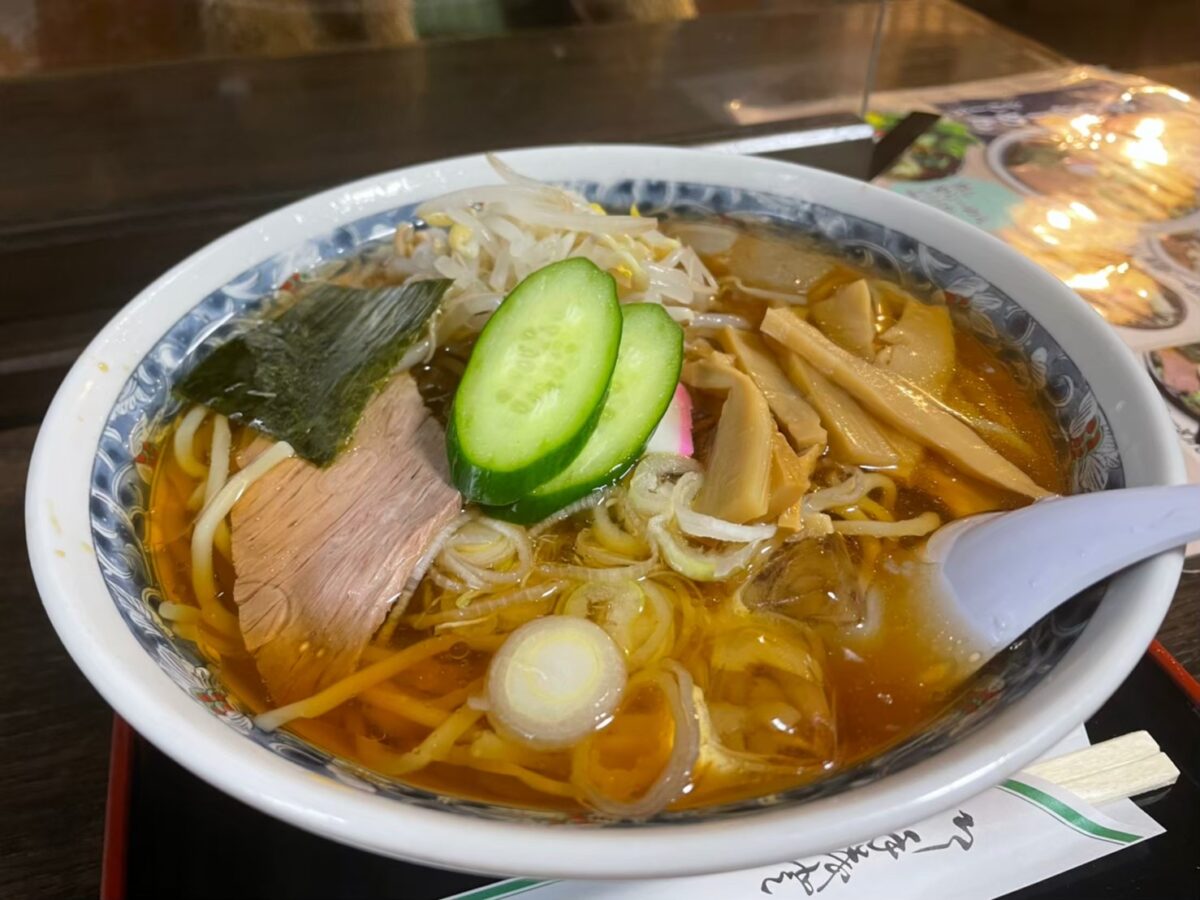
Many people know ramen as one of Japan’s most popular dishes, but Yamagata Prefecture is home to a truly unique ramen style.
Normally, ramen is served piping hot, and people enjoy it while blowing on the steaming broth to cool it down. But hiyashi ramen is completely different—it isn’t hot at all. As the name suggests, hiyashi means “cold,” and this ramen is served with both the noodles and the broth chilled, with even ice floating in the soup.
The noodles are firm and pleasantly chewy after being chilled in cold water, and the refreshing soy sauce-based broth is wonderfully tasty. Even though I tried it in winter, I ended up drinking every last drop of the soup. Still, I have a feeling it would be even more delicious in the summer.
Zunda mochi 🫛
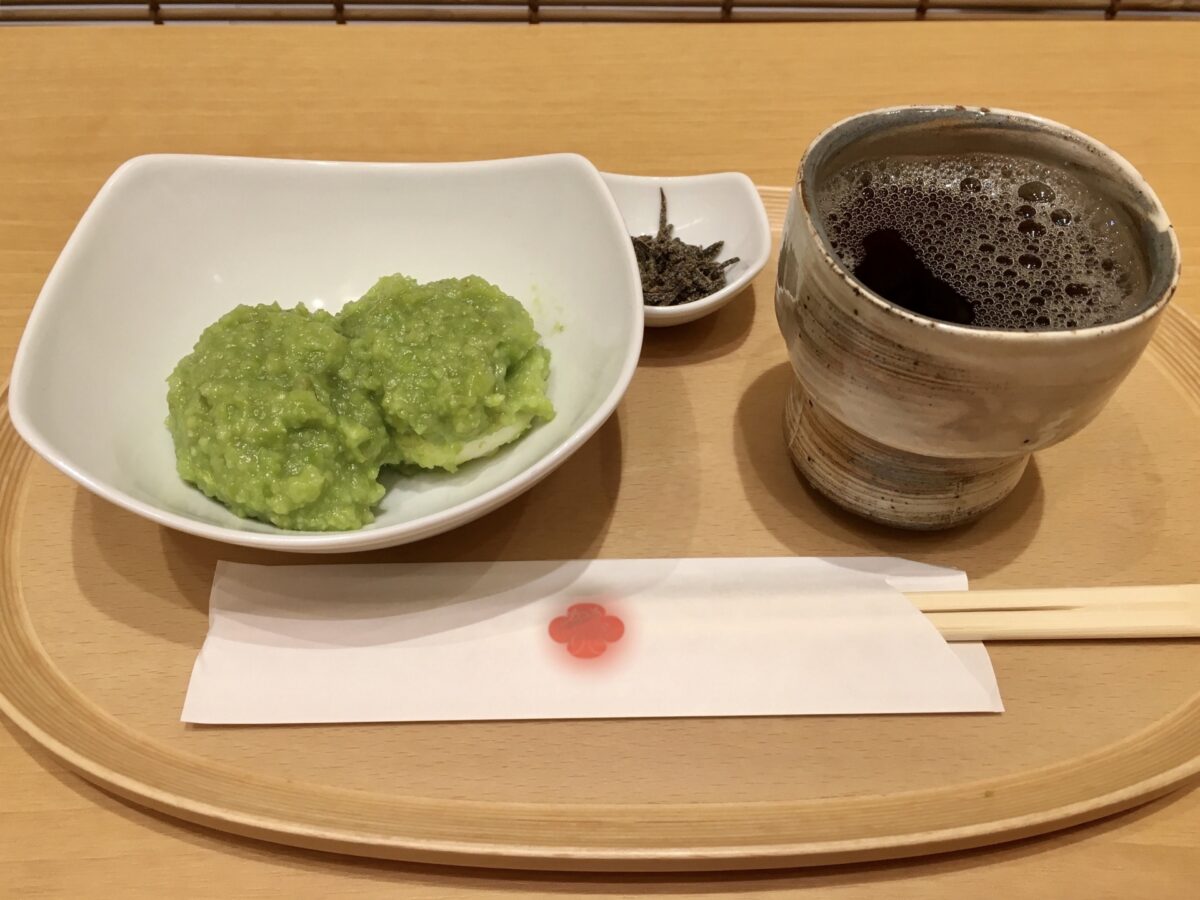
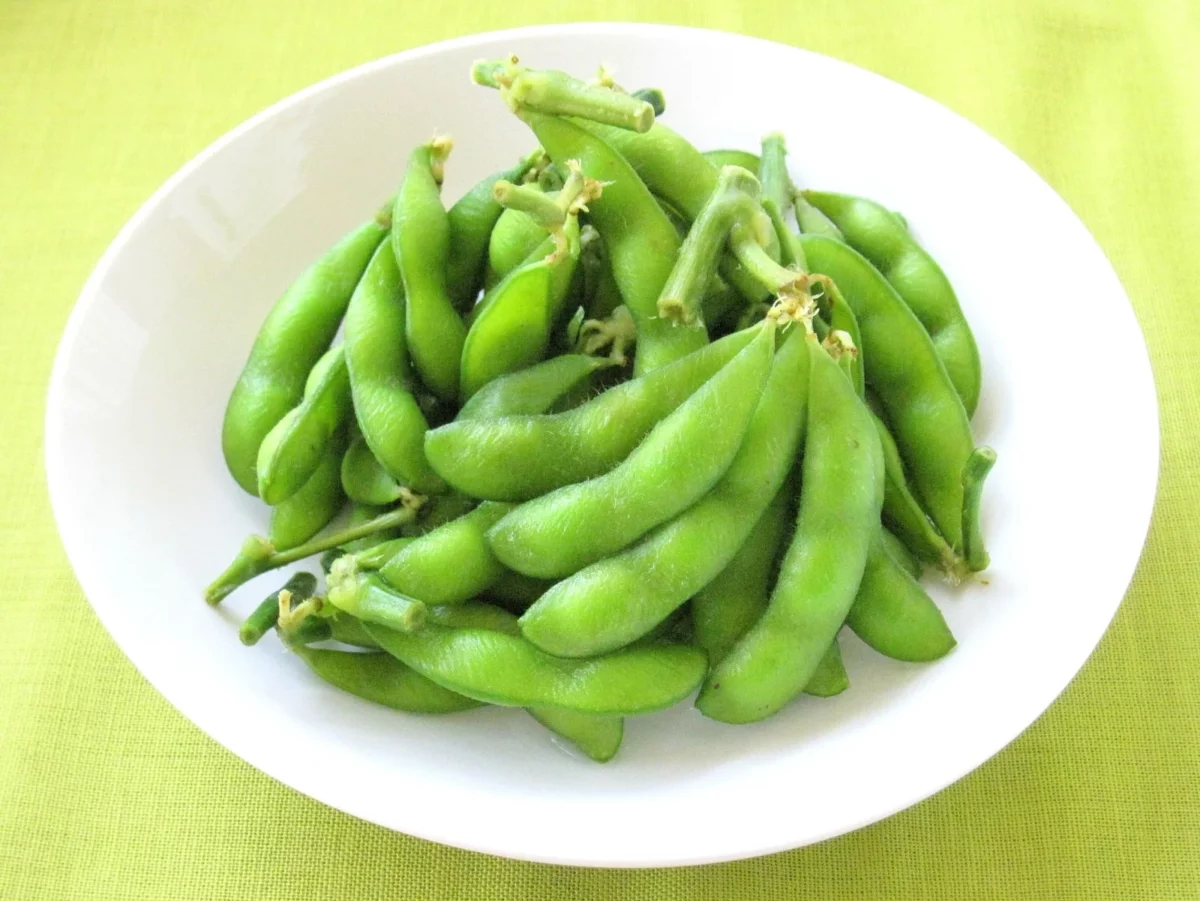
The main ingredient in this green mochi may actually be something many of you have tried before. I’ve even seen it several times at Japanese restaurants overseas. That ingredient is edamame.
When people think of edamame, they usually picture it boiled and sprinkled with salt as a snack to go with drinks. But zunda mochi is something different. The boiled edamame is mixed with sugar and salt, then mashed into a paste and poured over mochi. So the flavor is probably quite different from what you might imagine when you hear “edamame.”
What stands out most is its gentle, natural sweetness. It’s not too sweet, and it has a refreshingly light taste that makes it easy to enjoy.
I hesitated a little before trying it, wondering if it would really be tasty, but after one bite, I was hooked and finished it in no time. Besides mochi, another very popular zunda treat is the zunda shake. You’ll probably spot it as you walk around the city, so be sure to try both.
Miyagi
Naruko Gorge
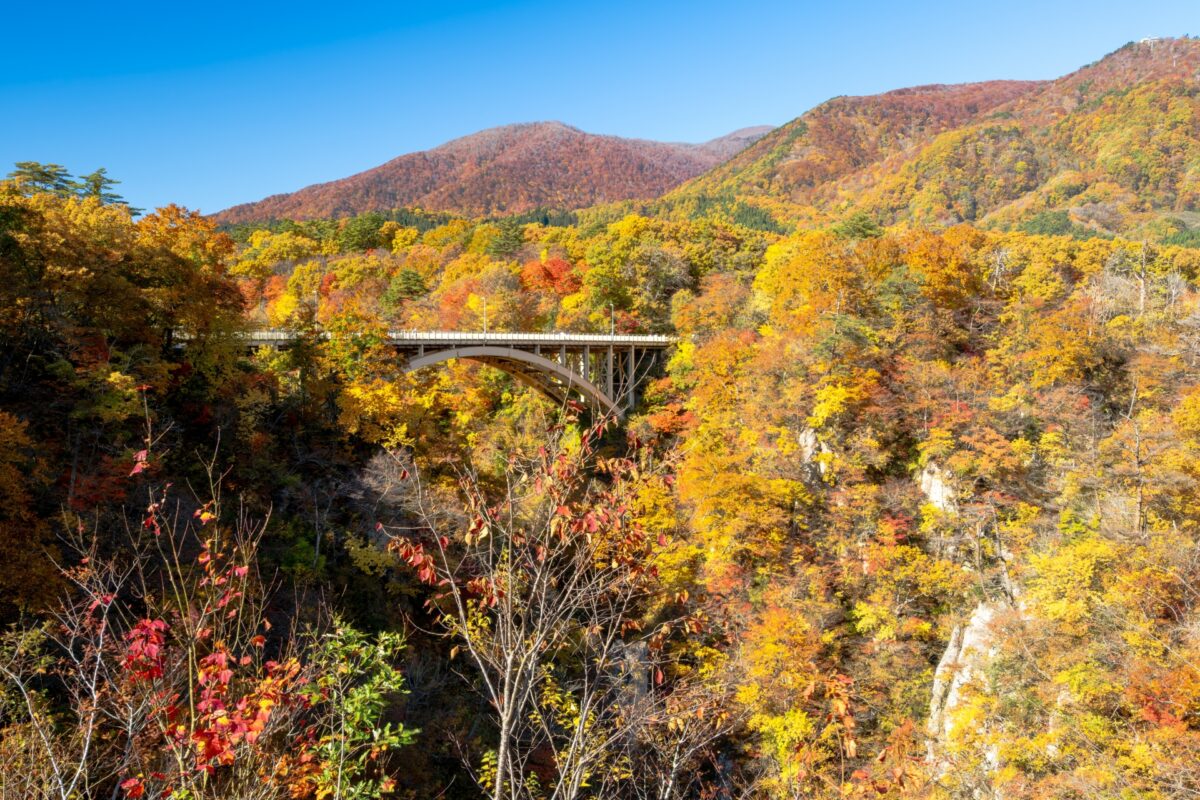
Naruko Gorge is a stunning spot for soaking in nature’s seasonal splendor—a 2km canyon carved by water rushing through sheer cliffs, creating jaw-dropping rock formations.
Its peak fame hits in autumn’s fiery foliage season, earning it the nickname “Little Kyoto of Northern Japan.” Well-maintained walkways and viewpoints let you get up close to the craggy walls, blazing leaves, and rushing streams.
Pair it with nearby Naruko Onsen village for hot springs—the perfect combo! Why not dive into both?
Matsushima
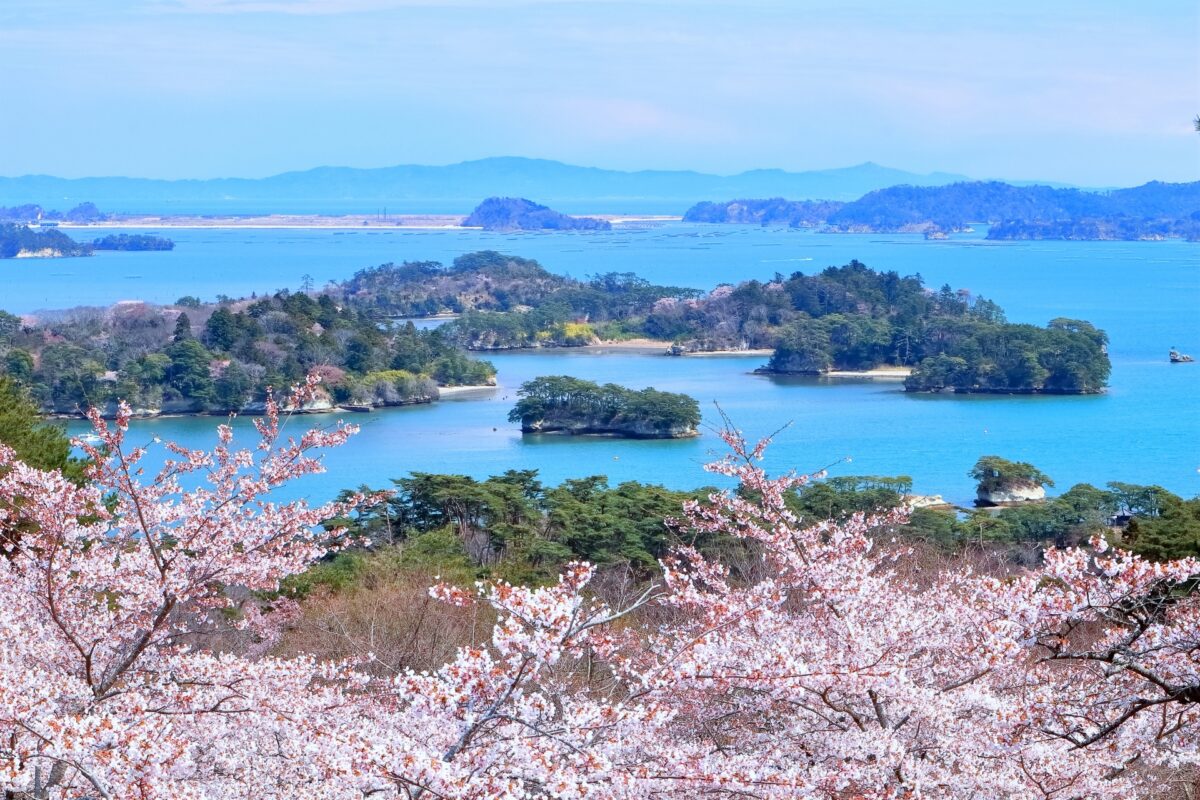
Matsushima Bay ranks among Japan’s Three Best Views—one of the country’s most rigorously selected scenic masterpieces.
Over 260 pine-dotted rock islands in every size and shape create an utterly breathtaking panorama. Cruising between them by tour boat is magical, but nothing tops the panoramic sweep from a mountaintop lookout.
Zao Fox Village 🦊
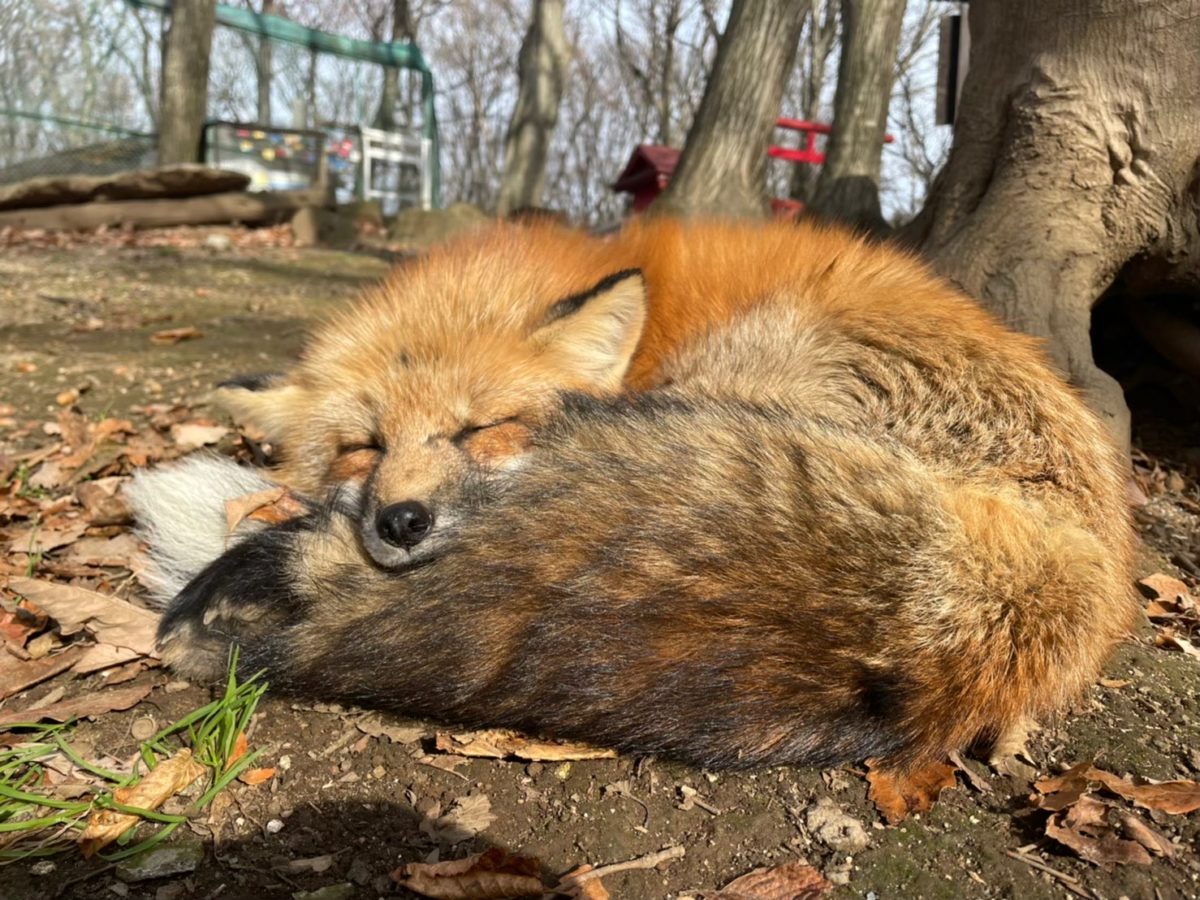
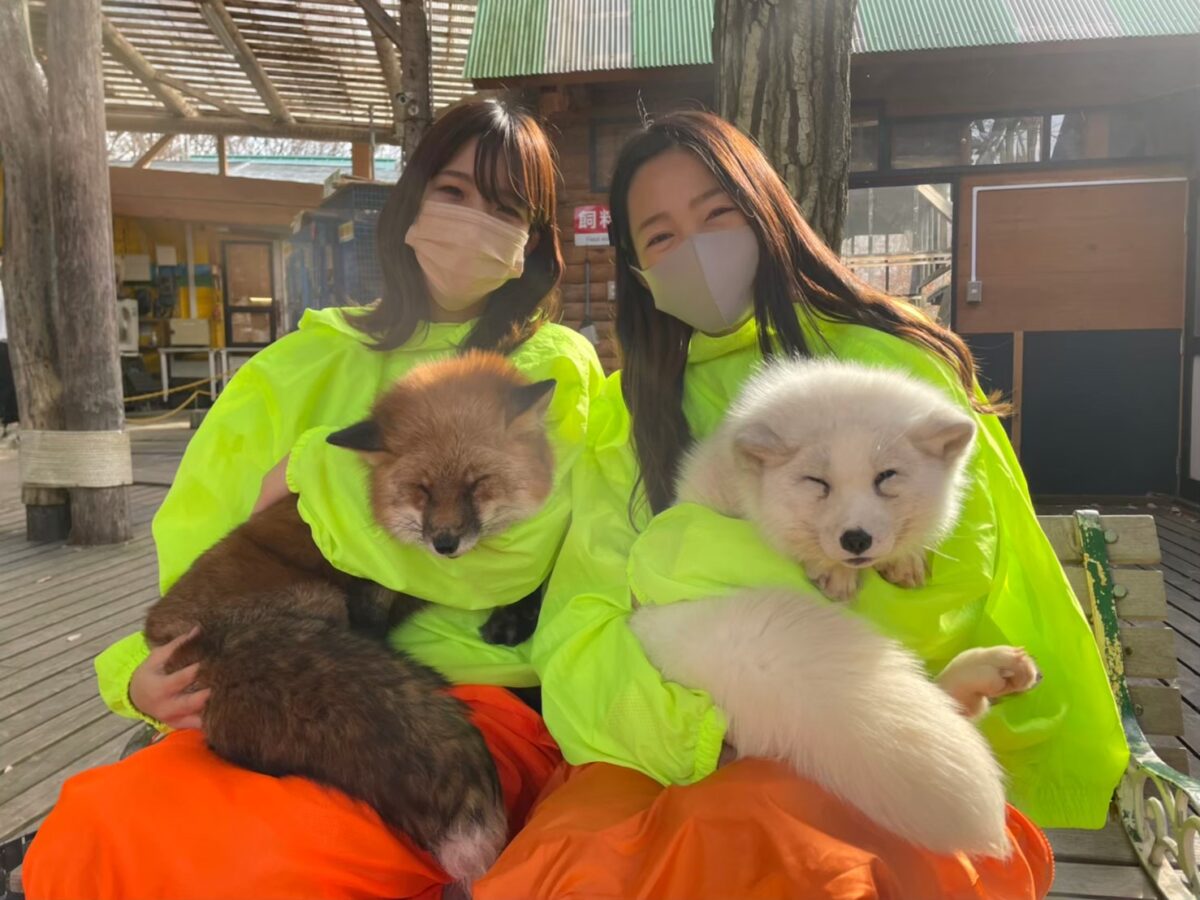
Zao Fox Village is my most unforgettable spot in Miyagi Prefecture. Around 100 foxes roam free in a natural forest setting, letting visitors wander right up close to watch them in action.
Alongside Japan’s native Ezo red foxes, you’ll spot rare silver foxes, platinum foxes, Arctic foxes, and three more varieties—spotting ones I’d never seen before got me ridiculously excited.
Napping foxes, squabbling ones, playful chasers—you catch all their wild, everyday behaviors that feel like a rare privilege.
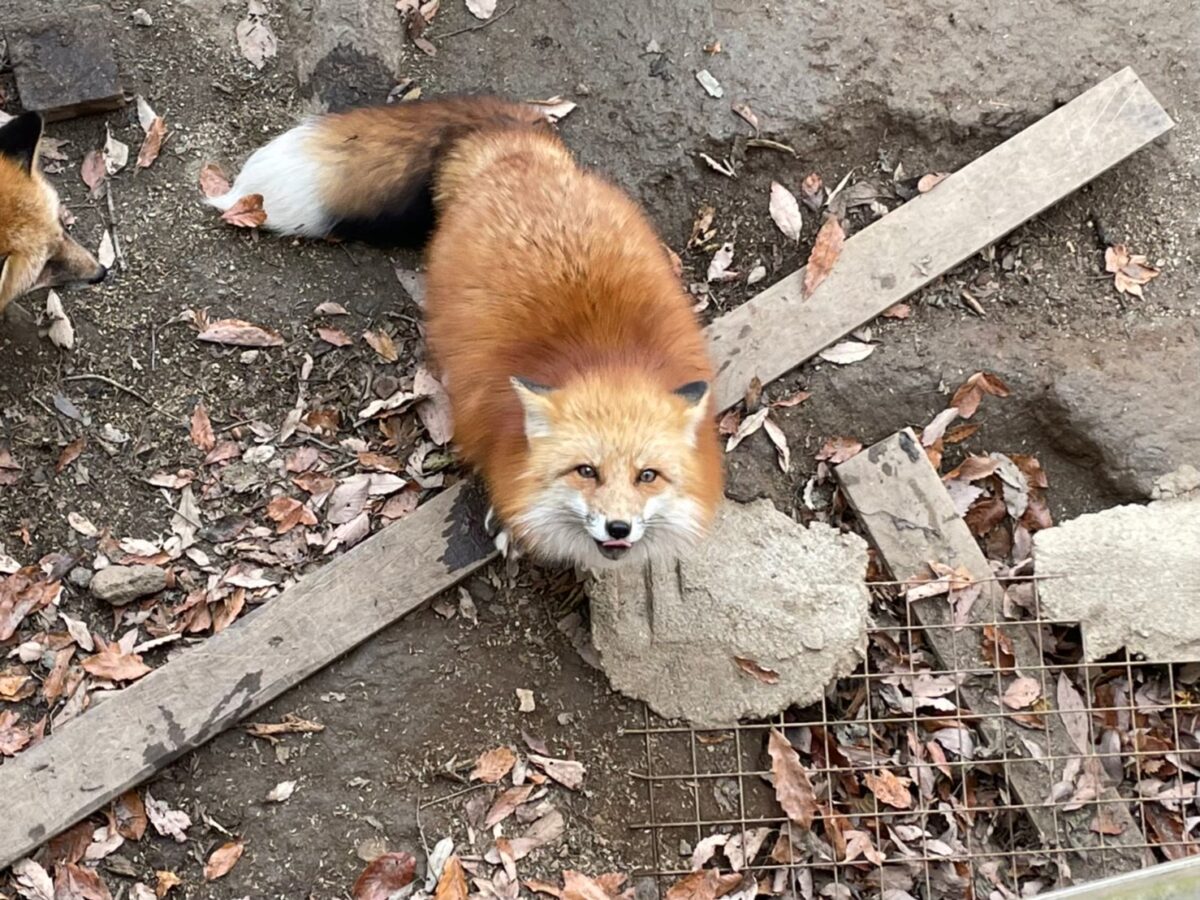
From the feeding tower, you toss them snacks; they look up begging with those irresistible faces. Hearing a fox’s actual call for the first time blew me away—way cuter than I ever imagined!
Even wilder: for an extra fee beyond entry, you can pay for a “fox cuddling experience”—first-come, first-served at set times, so check schedules ahead.
The fox that hopped into my arms was super chill and fluffy beyond belief—pure bliss. What shocked me? Its tail was insanely thick, as wide as my thigh! Those 5 minutes became etched in memory forever.
Entry at just 1000 yen blew my mind—such a bargain for an irreplaceable thrill, another reason I rave about it.
Foxes carry echinococcus parasite risks, but regular checks and top-notch hygiene here make it feel totally safe.
Beef tongue🐃
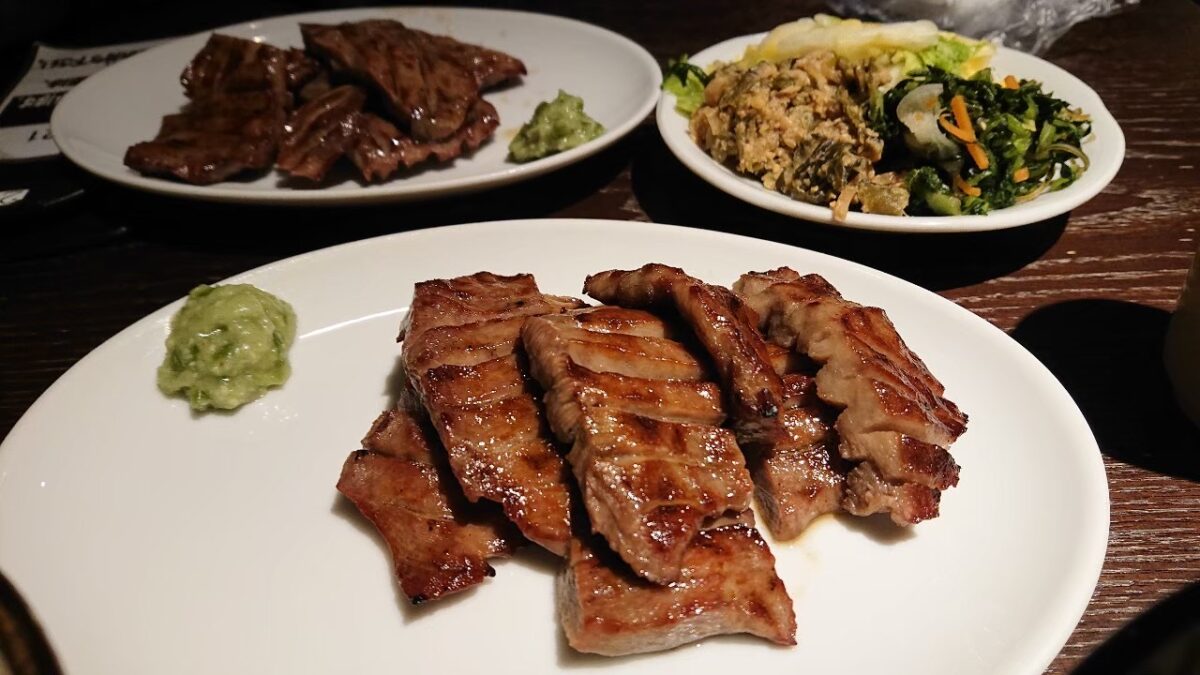
Have you ever tried beef tongue? I was surprised when a friend from neighboring South Korea told me that people there don’t usually eat it either. He was a little nervous when he tried it for the first time, but he ended up being impressed by its delicious flavor and unique texture.
In Japan, beef tongue is a classic choice at yakiniku restaurants, and many people order it before anything else. While tongue is usually served thinly sliced in other parts of Japan, Sendai is famous for its thick-cut beef tongue.
Grilled over charcoal, it’s incredibly tender, juicy, and full of flavor. The fat dripping onto the coals creates a wonderful smoky aroma, making the meat even more delicious. It goes perfectly with rice, too—you may find yourself reaching for another bite before you know it.
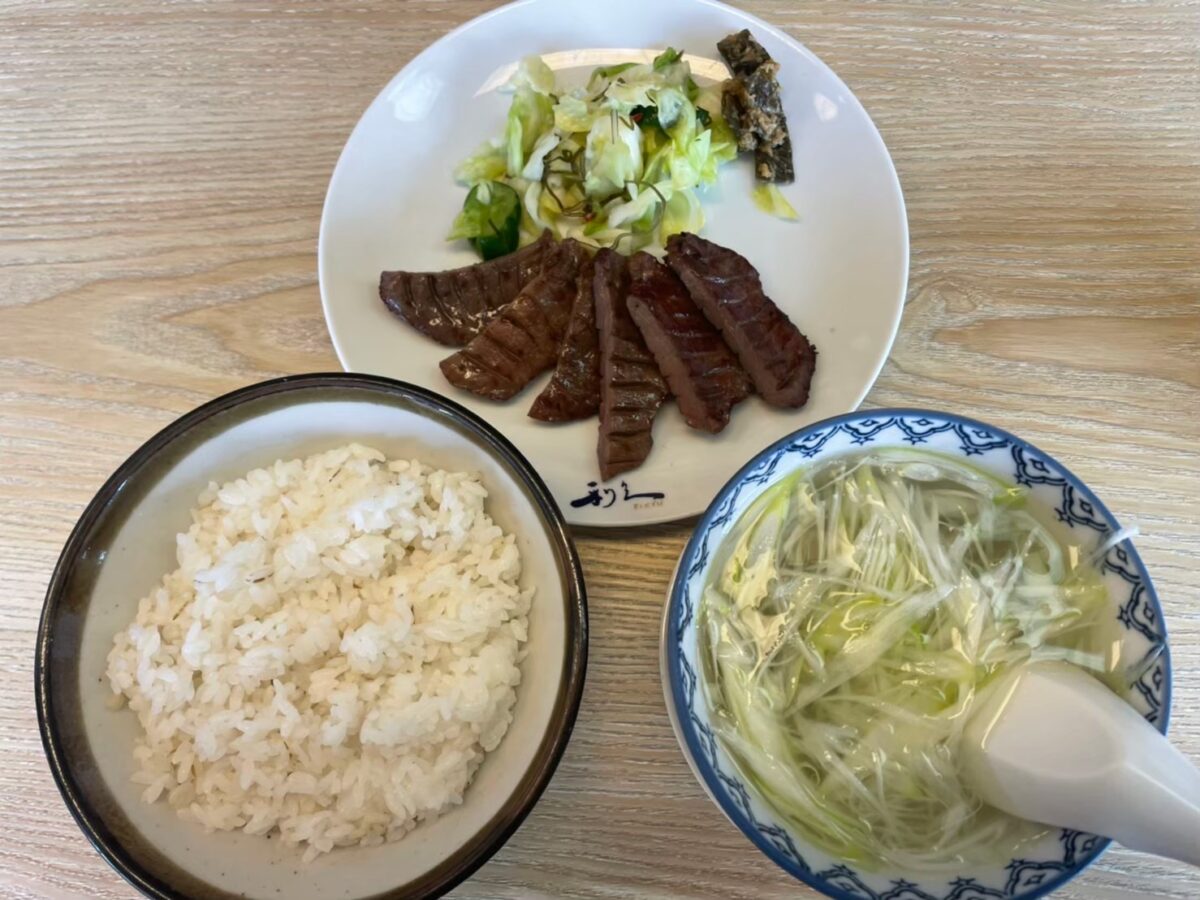
A light and tasty beef-tail soup is usually served with the meal. For the best experience, try the first few slices with just salt, then add some nanban miso later when you feel like changing things up.
If you’d like to try Sendai’s famous beef tongue, Rikyu, Kisuke, and Tanya Zenjiro are great places to start. You’ll find locations throughout the city, so why not give this local specialty a try?
Fukushima
Ouchi-juku
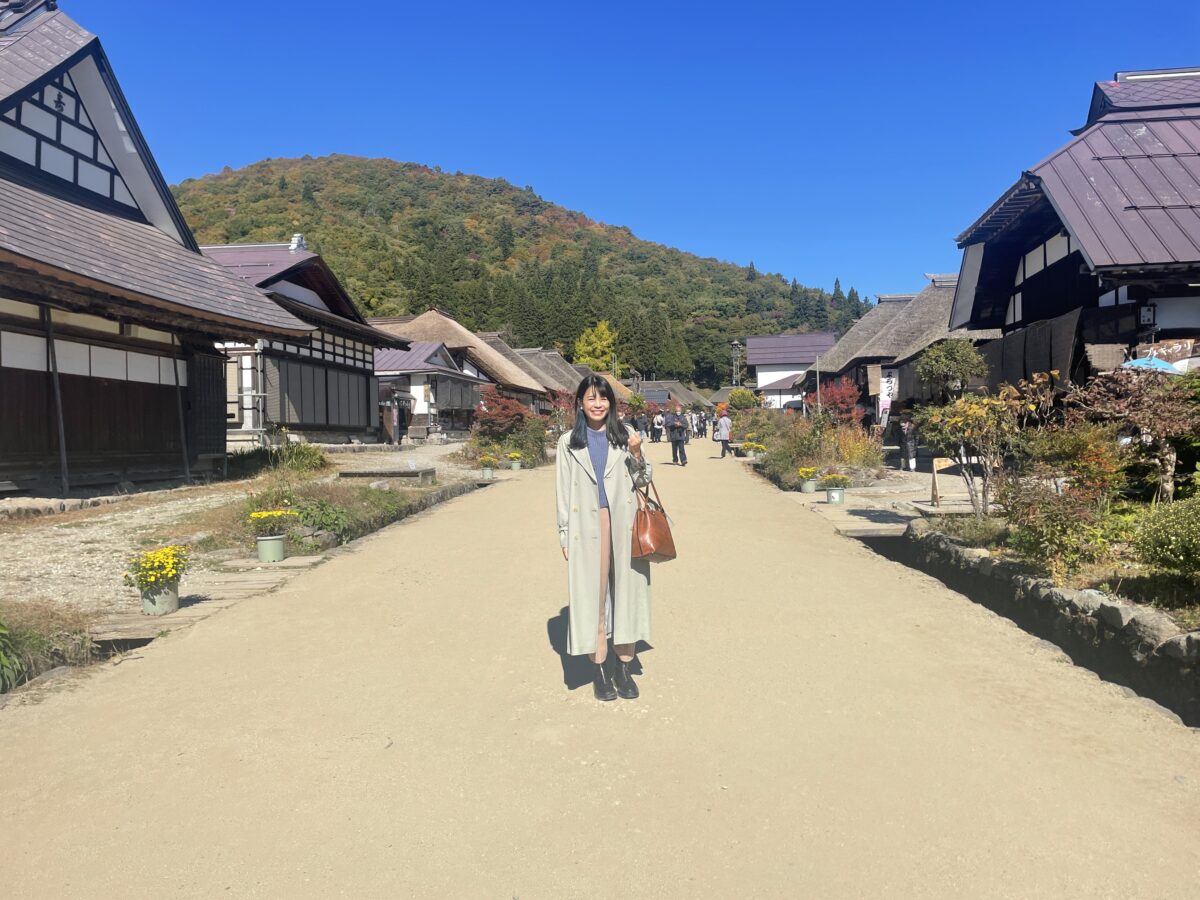
Ouchi-juku is the perfect place to feel like you’ve traveled back in time 400 years. As you walk along the street, you’ll see traditional thatched-roof houses lined up on both sides. It’s such a unique Japanese scene that you may find yourself stopping every few steps to take photos.
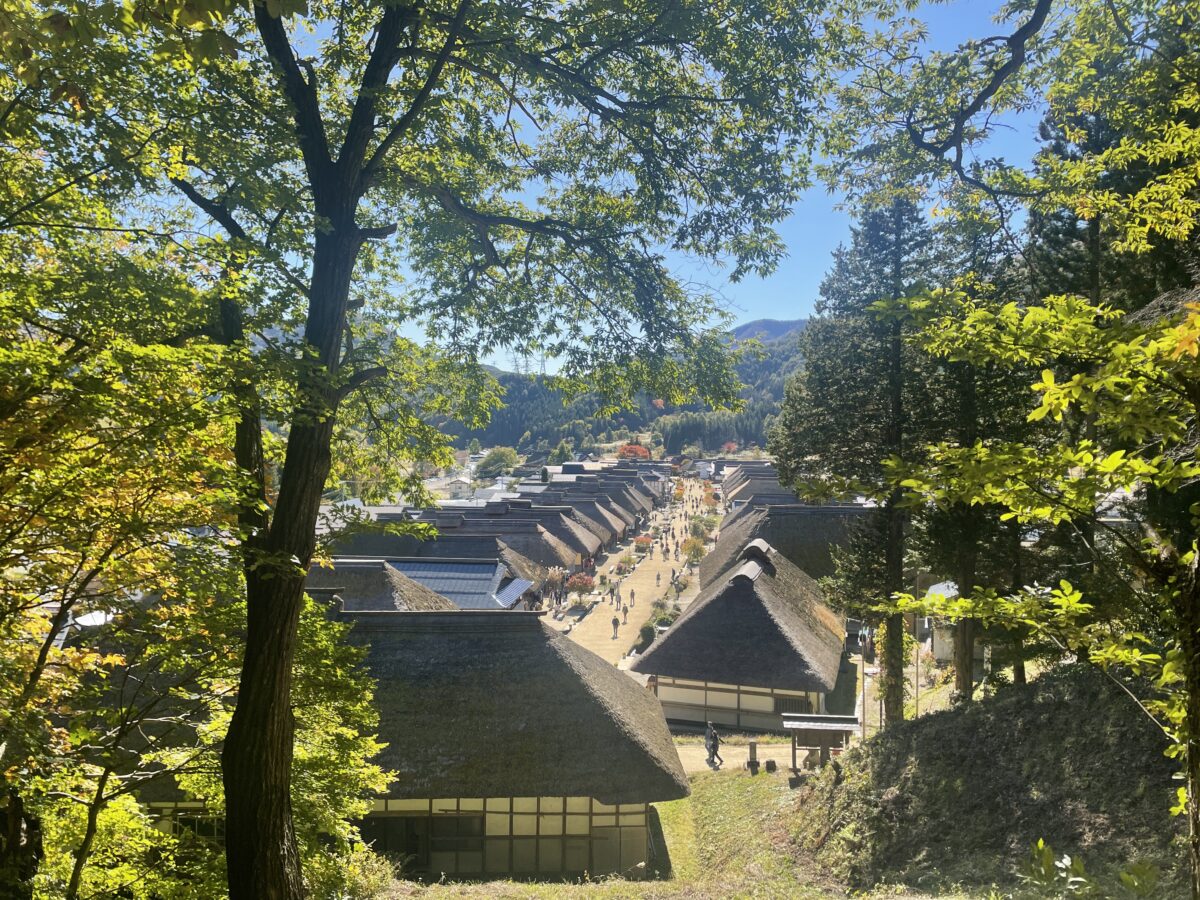
One spot you really shouldn’t miss is the viewpoint at the far end of Ouchi-juku. It takes only about five minutes to walk up the hill, and the view from the top is well worth it. From there, you can see the entire village and its thatched-roof houses spread out below you. Looking down at the town, I truly felt as if I had stepped into old Japan.
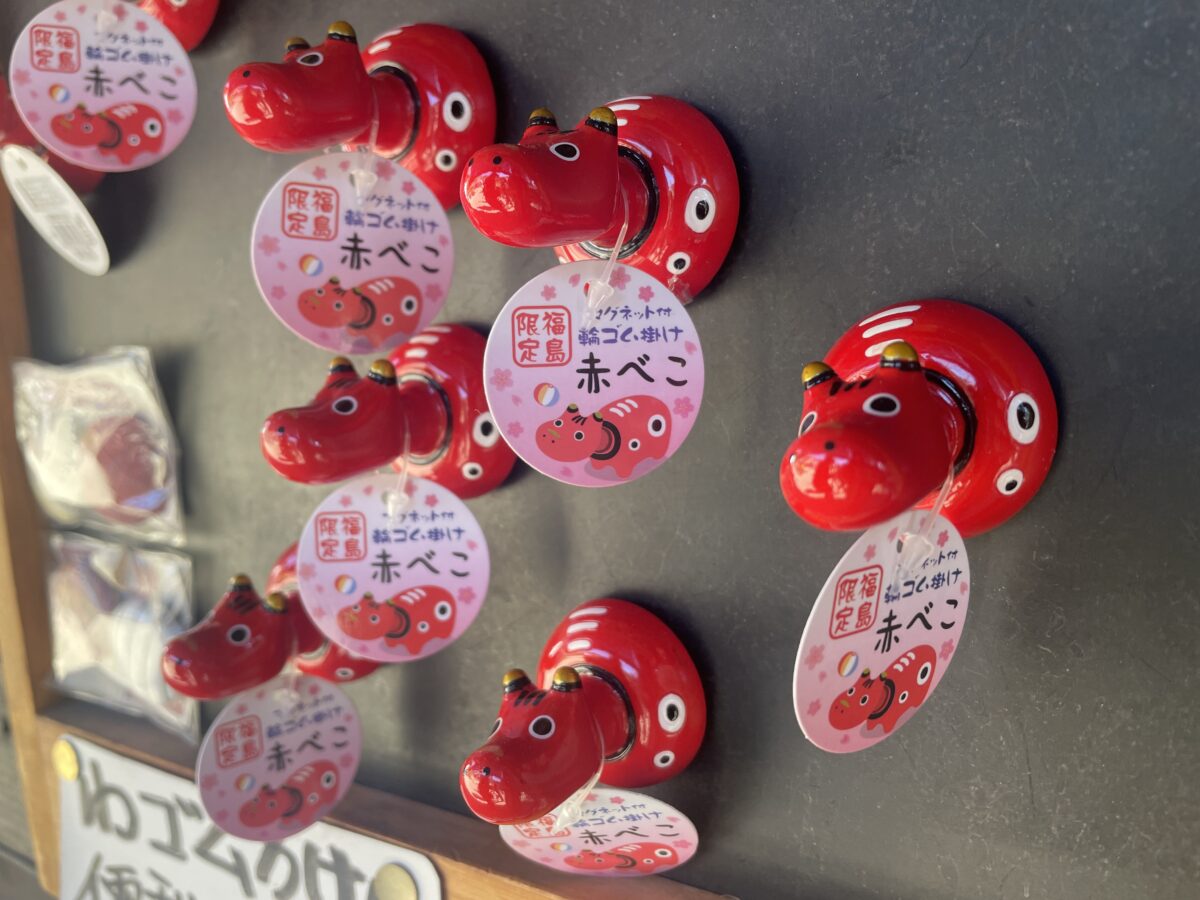
The street is also filled with souvenir shops selling local pickles, Japanese goods, and traditional crafts. I couldn’t resist buying an Akabeko magnet—a cute red cow with a strap around its neck. I now use it in my kitchen, so it brings back memories of Ouchi-juku whenever I see it.
Akabeko is a beloved good-luck charm from this region, traditionally thought to ward off evil and protect against illness. Its most charming feature is its gently bobbing head, so if you spot a life-sized Akabeko around town, be sure to give its neck a little touch and watch it wobble!
Just keep in mind that the head of this small souvenir version doesn’t move.
There’s also a particularly unusual local food that you should definitely try while you’re here. I’ll introduce it next, so keep reading!
Negi soba at Misawaya 🥢
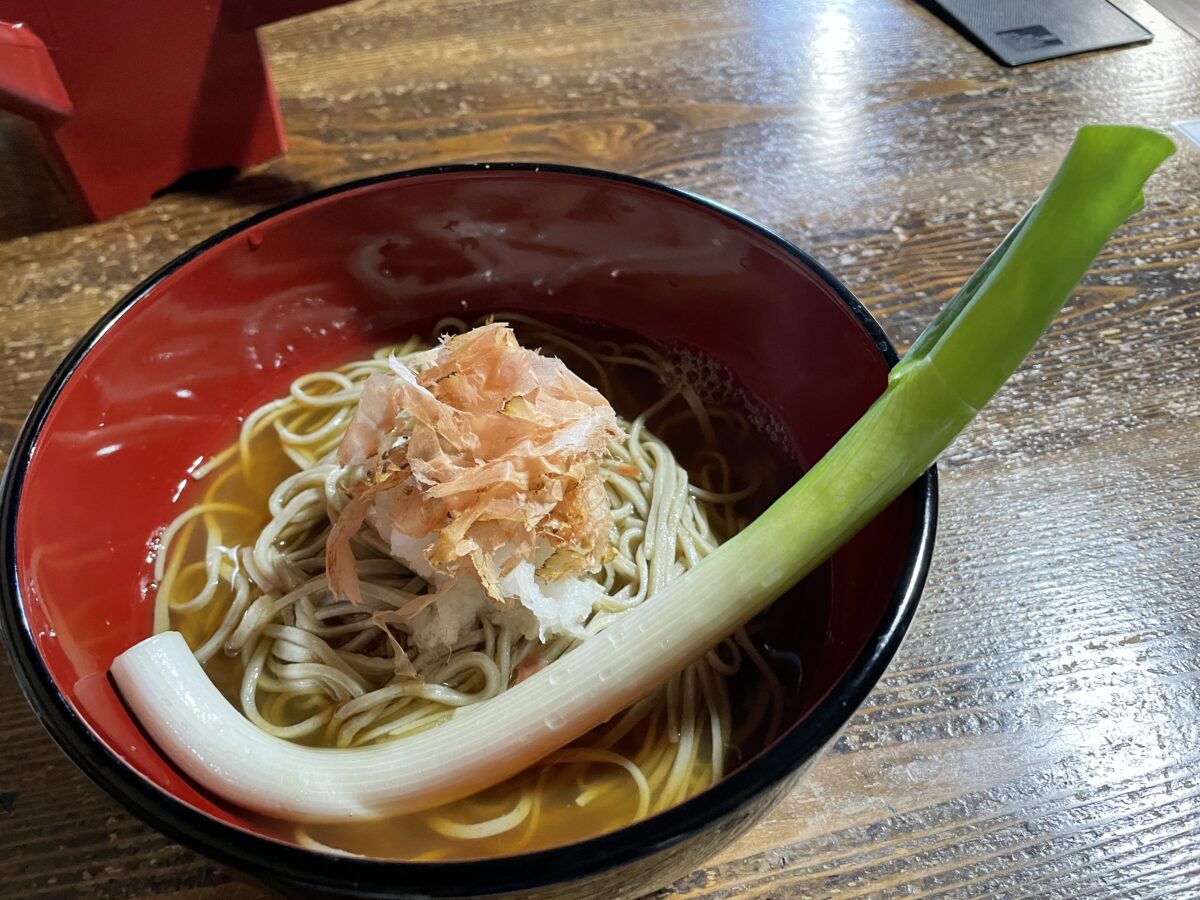
Almost everyone who visits Ouchi-juku makes sure to try its famous Negi soba before heading home. (Negi is green onion) There are several restaurants serving it around the town, but Misawaya is especially popular. When I visited, there was a one-hour wait.
The good news is that you don’t have to stand in line the whole time. Just write your name in the notebook at the entrance, then enjoy exploring Ouchi-juku while you wait. It’s a great way to make the most of your time.
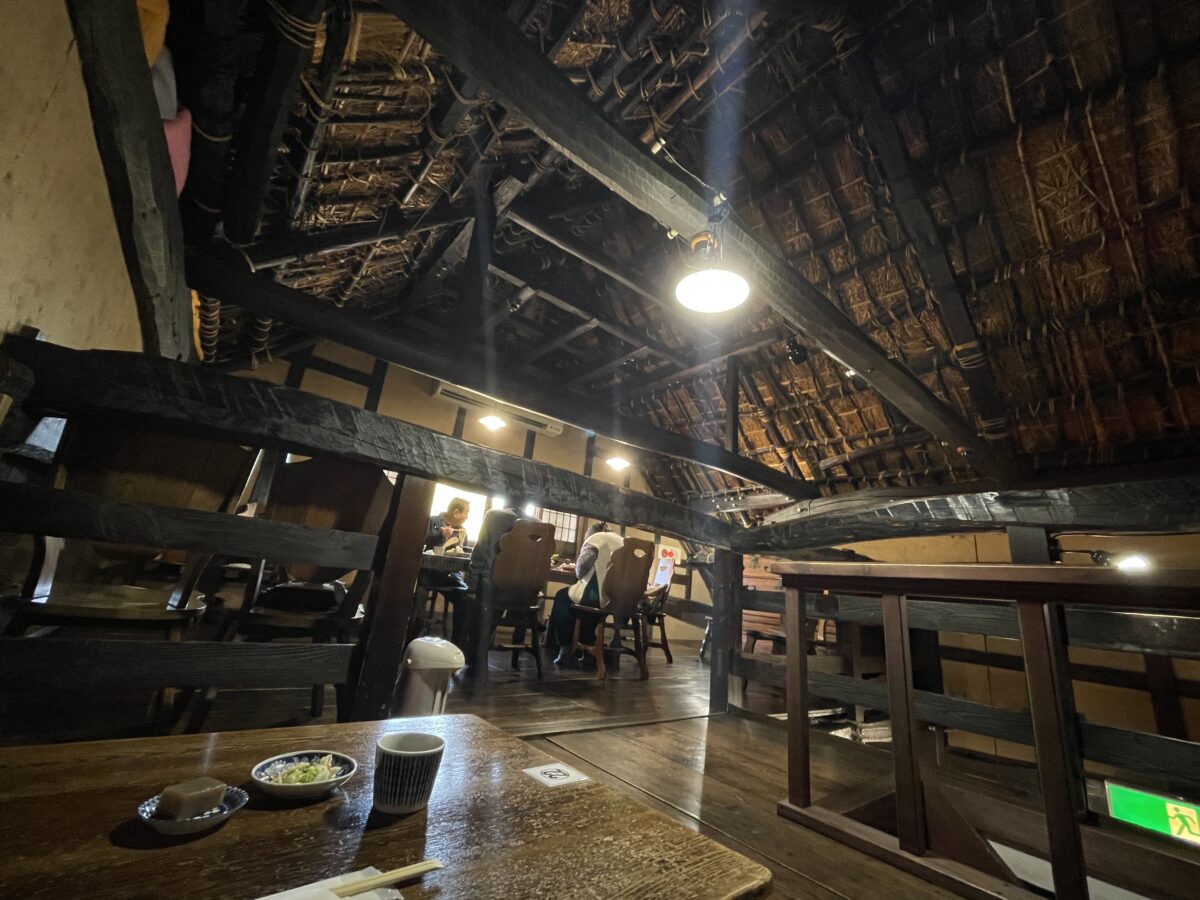
The restaurant itself feels like stepping into an old Japanese farmhouse. The large wooden pillars are still exposed, which gives the place a wonderfully traditional atmosphere.
But the real surprise is how you eat the soba: instead of chopsticks, you use a long, curved green onion! The onion also acts as a topping, making this one of the most unusual dishes you’ll find in Japan.
The raw onion and grated daikon(white radish) give the dish a slightly sharp flavor, but they go surprisingly well with the mild soba and dipping sauce. It’s simple, unusual, and really delicious.
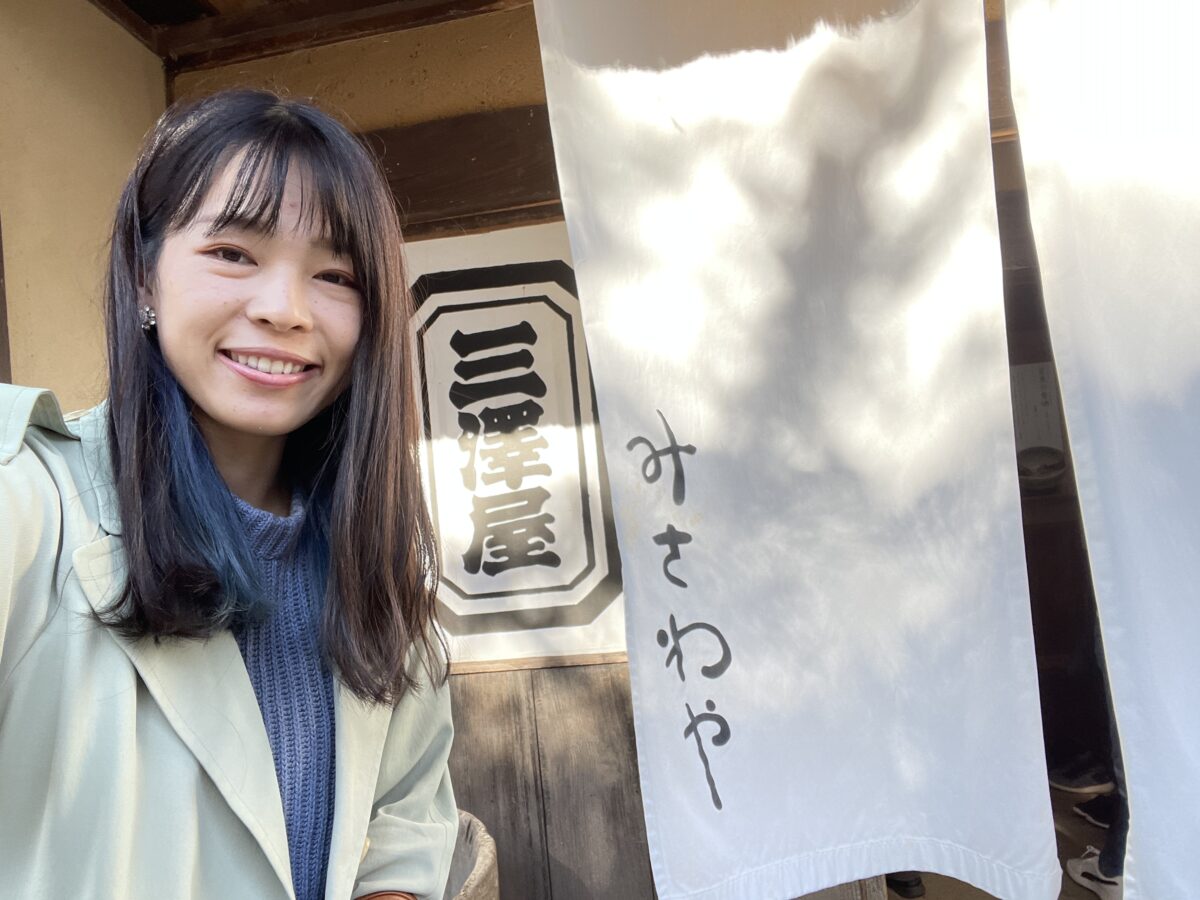
Eating noodles with a green onion is a little tricky at first—the noodles tend to slip right off. But that’s part of the fun! And once the onion gets too short to use, you can simply switch to the chopsticks provided with the meal.
Goshikinuma Ponds
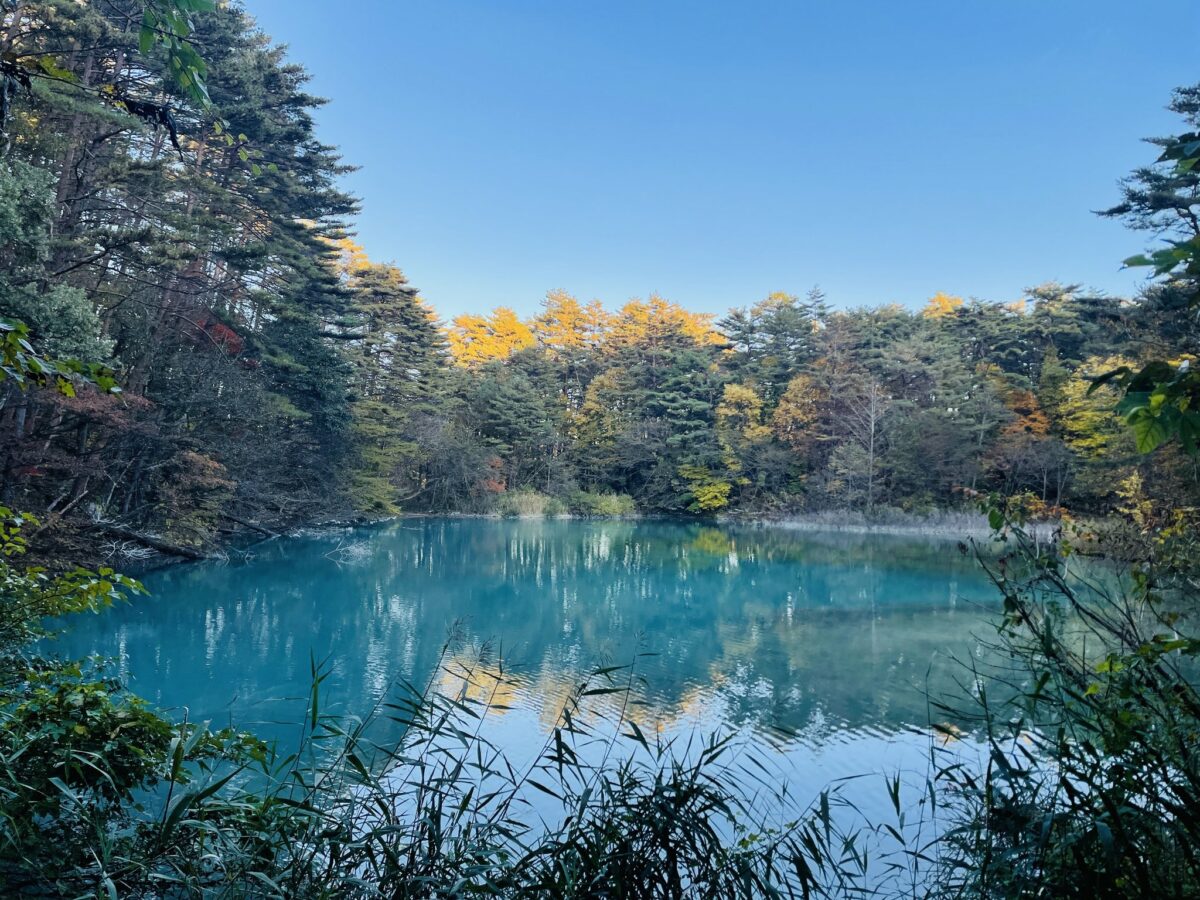
Goshiki-numa is a volcanic crater lake cluster born from eruptions. “Goshiki” means “five colors”—the water shifts between blue, green, emerald, cobalt, and brown depending on minerals and sunlight angles.
Boardwalks let you get right up close. I swung by on an autumn afternoon around 3 PM; started with emerald green, then watched it morph as the sun dipped low.
It’s also a birdwatching hotspot—tons of folks scoping out seasonal species.
Sazae Temple
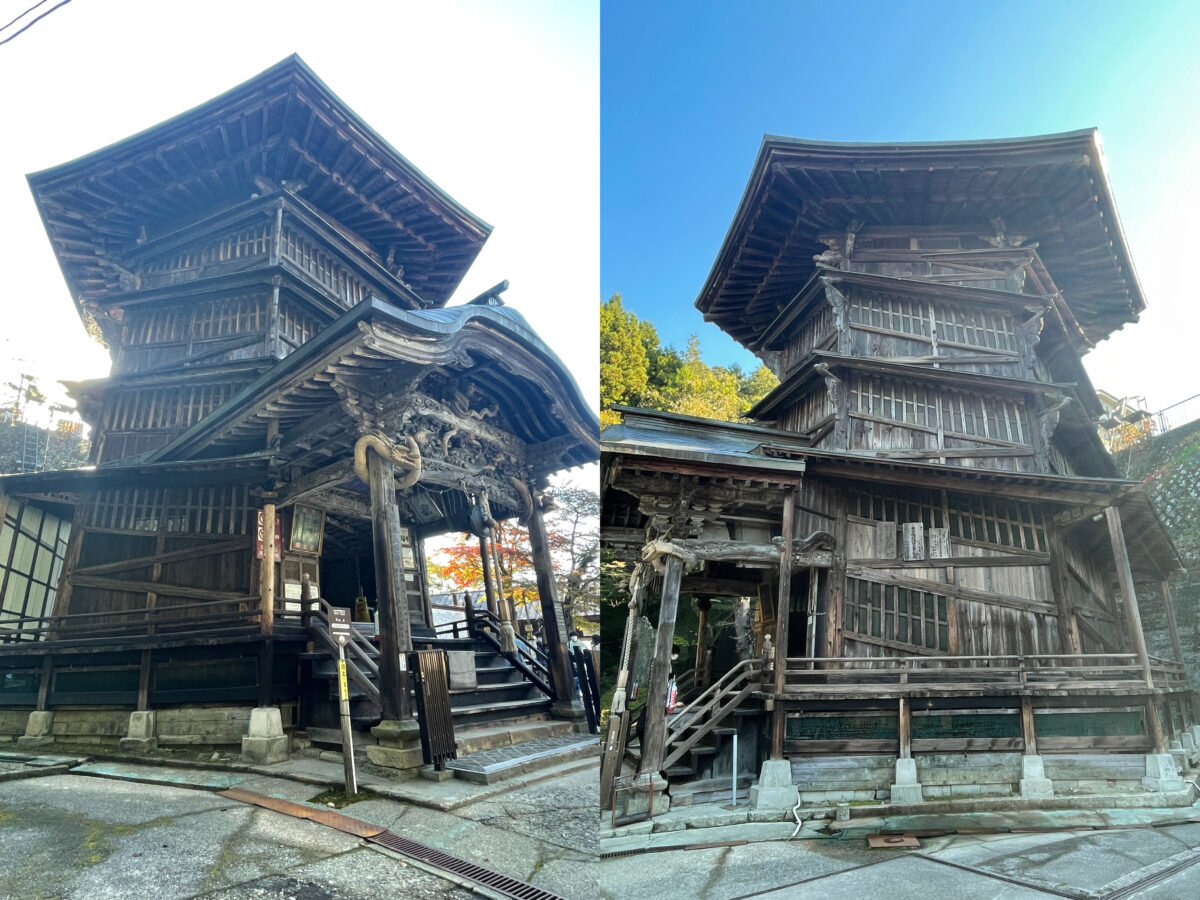
At first glance, Sazae-do may look like an ordinary Japanese temple, but its unusual design makes it truly one of a kind.
Inside, two spiral staircases wind around each other. Once you reach the top, you don’t have to turn around and retrace your steps—instead, a separate path leads you back down. This clever one-way layout means that visitors going up and coming down never have to pass each other.
The building’s shape and interior structure resemble the spiral shell of a turban shell, known in Japanese as a sazae. That’s where its name comes from. A Buddhist temple with this kind of design is said to be found nowhere else in the world, making Sazae-do a fascinating place to explore.
Licca Caste 🏰
Do you know Licca-chan? She’s one of Japan’s most beloved fashion dolls, standing 22 centimeters tall with a cute, manga-style face and a wardrobe full of stylish outfits. Many Japanese girls grew up having fun dressing her in different clothes, and even today, she has plenty of fans among adults.
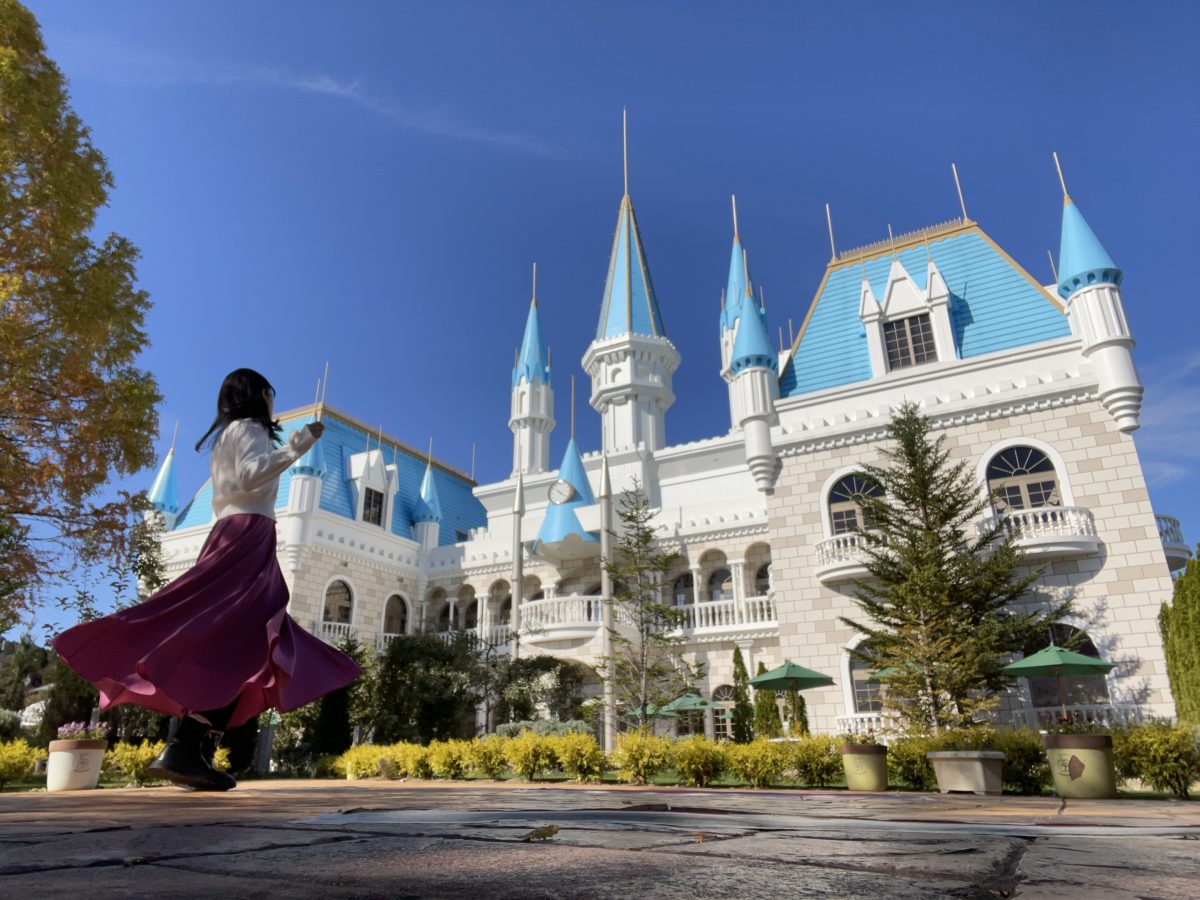
While driving through the countryside, I started wondering, “Could there really be a castle out here?” Then, all of a sudden, a bright blue castle appeared among the ordinary houses. It looked so out of place that it felt as if I had wandered into another world.

At the Licca-chan Castle, you can see how the dolls are made and explore a large collection, from the very first Licca-chan to the latest models. The dolls wear outfits inspired by the fashion of each era, and they’re incredibly cute. I also found it fascinating to see how Licca-chan’s appearance has changed over the years.

You can even create your very own Licca-chan. Another fun feature is the chance to try on Licca-chan costumes for free while exploring the factory. It’s a playful experience that both children and longtime fans can enjoy.
Miharu Takizakura 🌸
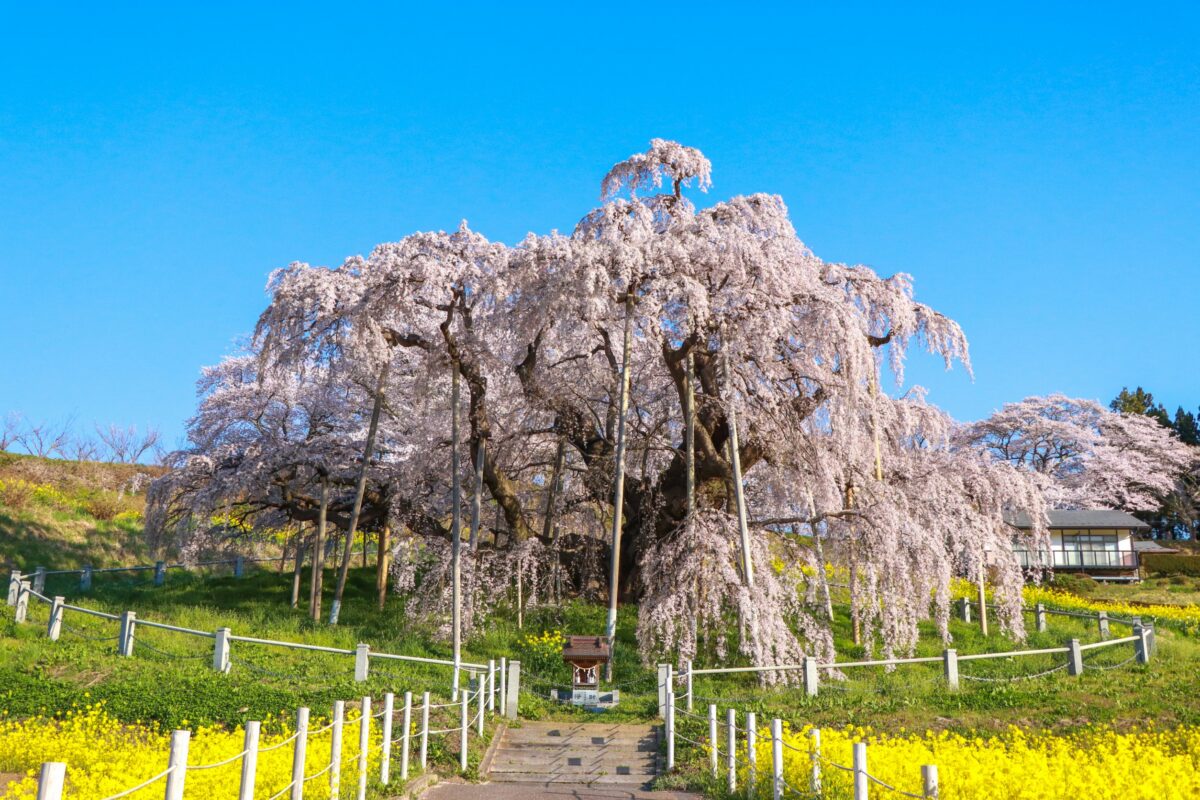
Miharu Takizakura is a magnificent cherry tree believed to be around 1,000 years old. Thanks to its age, impressive size, and historical significance, it is recognized as one of Japan’s Three Great Cherry Trees.
Its branches cascade down like a waterfall, creating an incredible display of flowers. Standing about 14 meters tall and spreading roughly 20 meters wide, the tree looks almost like a giant pink waterfall when it is in full bloom.
From a distance, you can appreciate its beauty as a whole. But if you stand near the base and look up, you’ll get a much stronger sense of the tree’s enormous branches and breathtaking scale.
Wappa-meshi
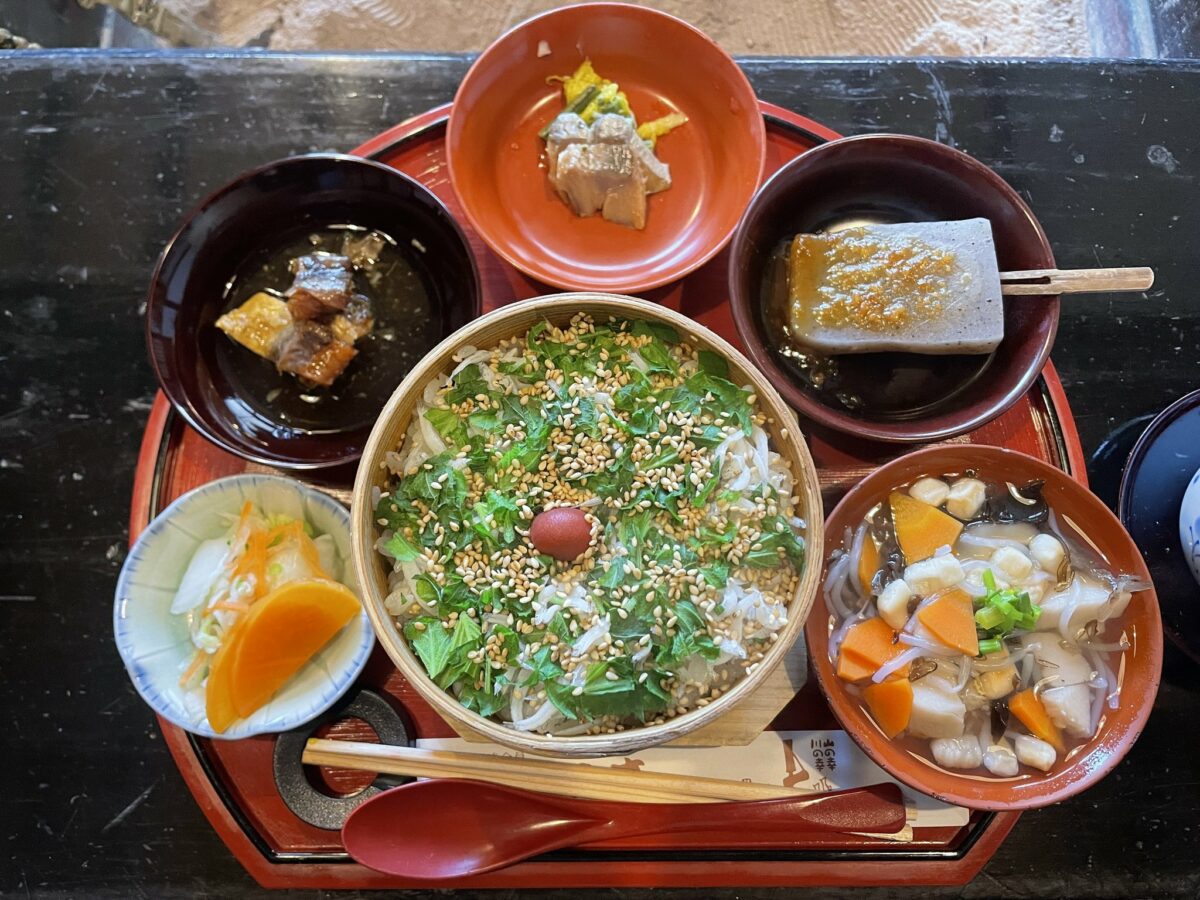
Wappa-meshi is a local Fukushima dish made by steaming rice and various toppings in a wooden container called a wappa. It usually comes with chicken, mountain vegetables, and mushrooms, and the rice is soft, fluffy, and full of flavor.
When you lift the lid, warm steam rises along with a lovely, gentle woodsy aroma. With all the colorful ingredients inside, it looks incredibly appetizing, too.
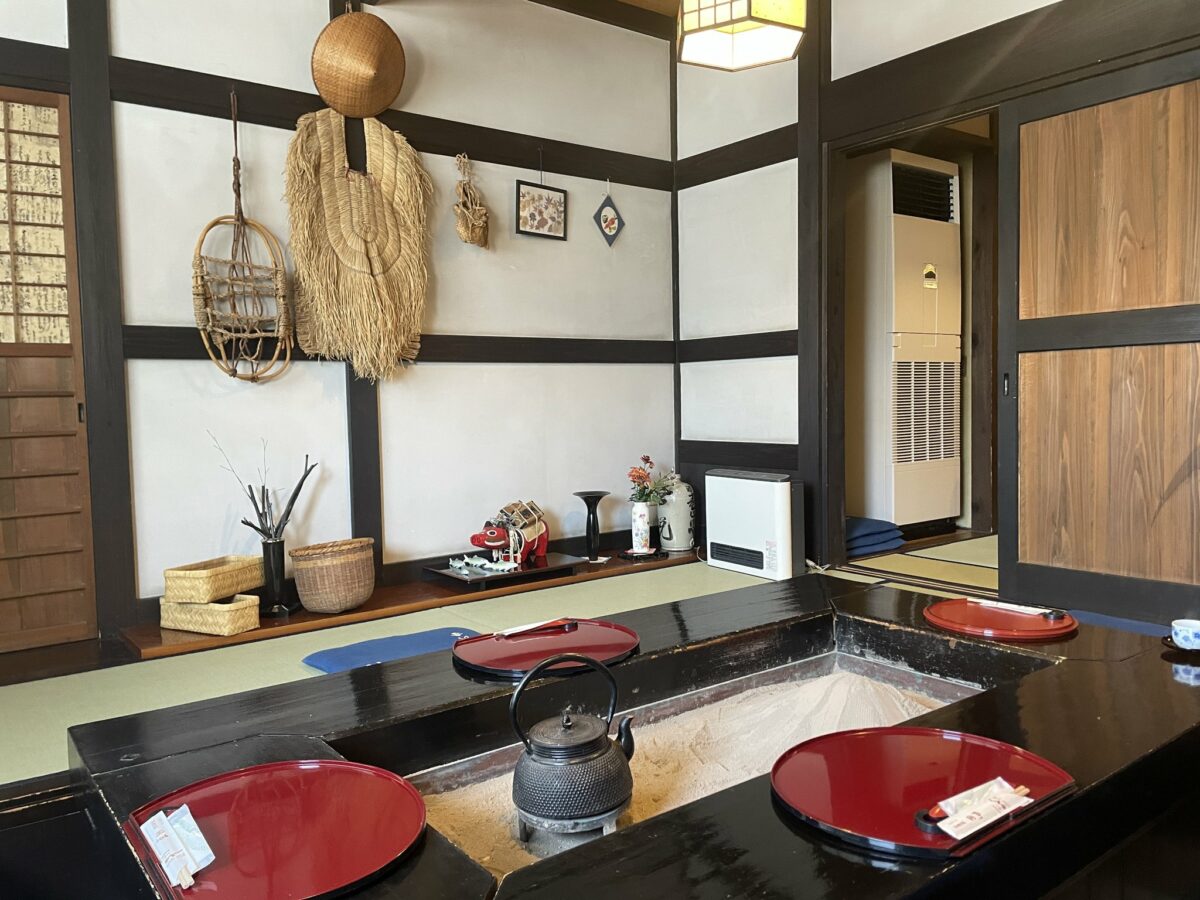
I visited Tagoto, a restaurant next to a traditional Japanese inn. Right in the middle of the room was an “irori“, a traditional Japanese hearth once used for cooking and heating. These days, it’s rare to see one even in Japan, so I was really excited. Sitting in front of the hearth and enjoying my meal made me feel like I had stepped back into old Japan.
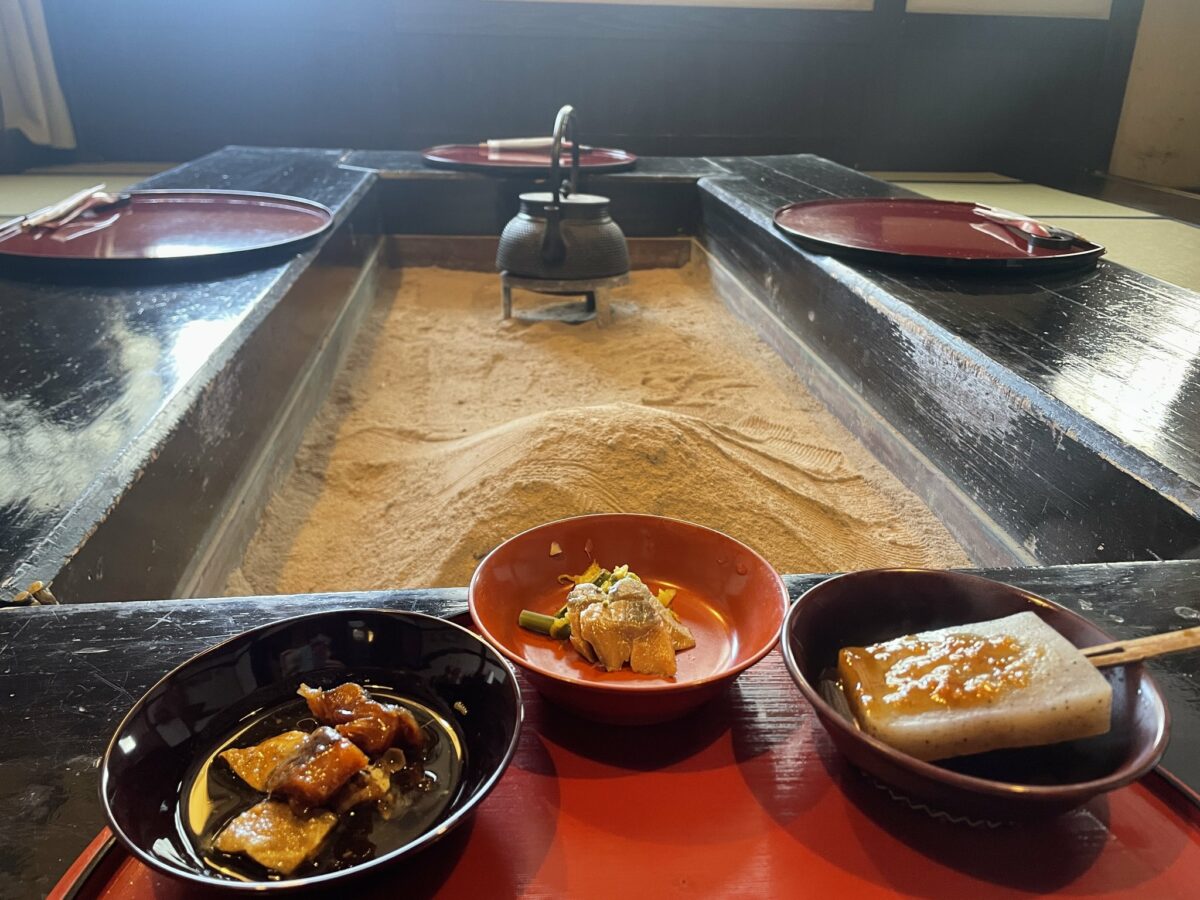
My meal came with wappa-meshi as the main dish, along with several other local specialties. It was a delicious way to enjoy a variety of traditional Fukushima flavors.
Kitakata Ramen 🍜
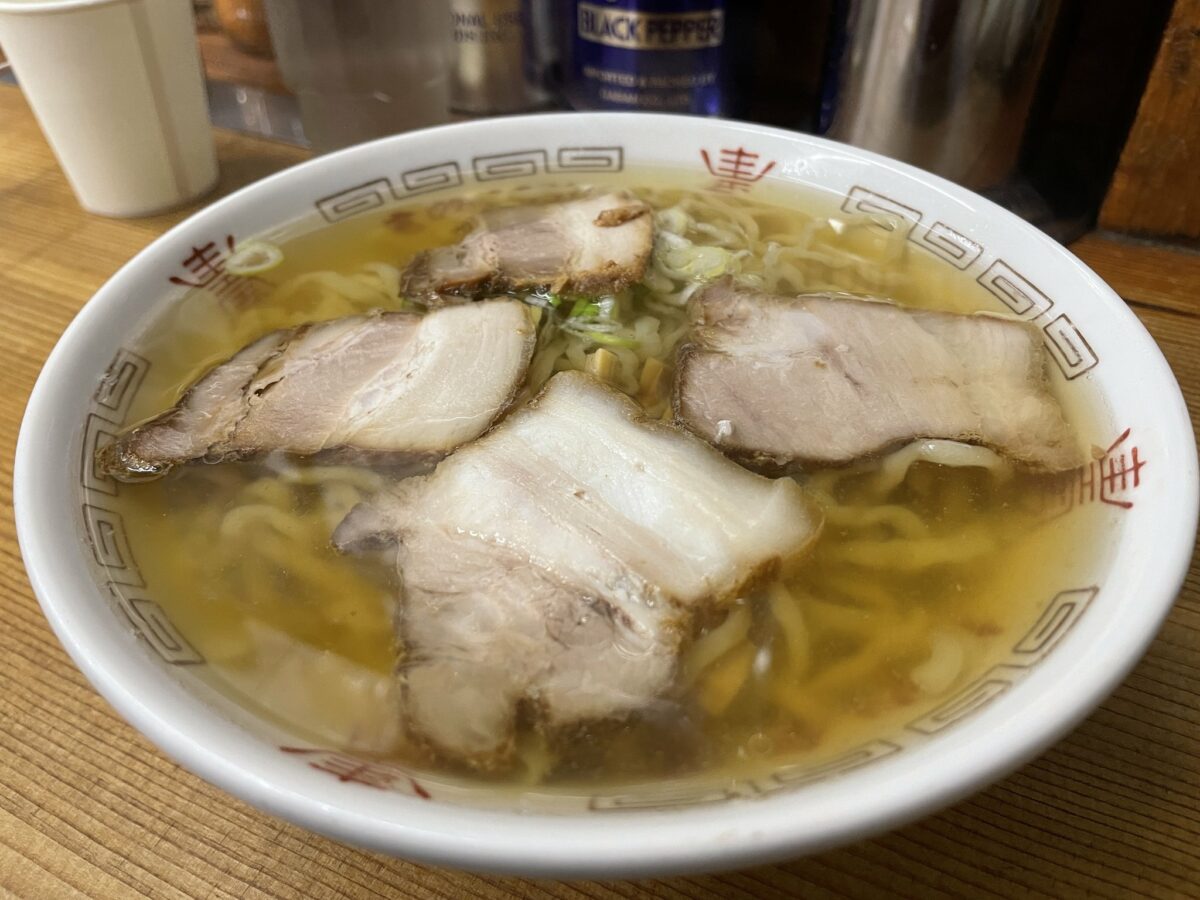
Kitakata ramen is one of Japan’s most famous regional ramen varieties. It features a clear soy sauce-based broth made with chicken bones and pork bones, springy thick noodles, slices of chashu pork, and menma bamboo shoots.
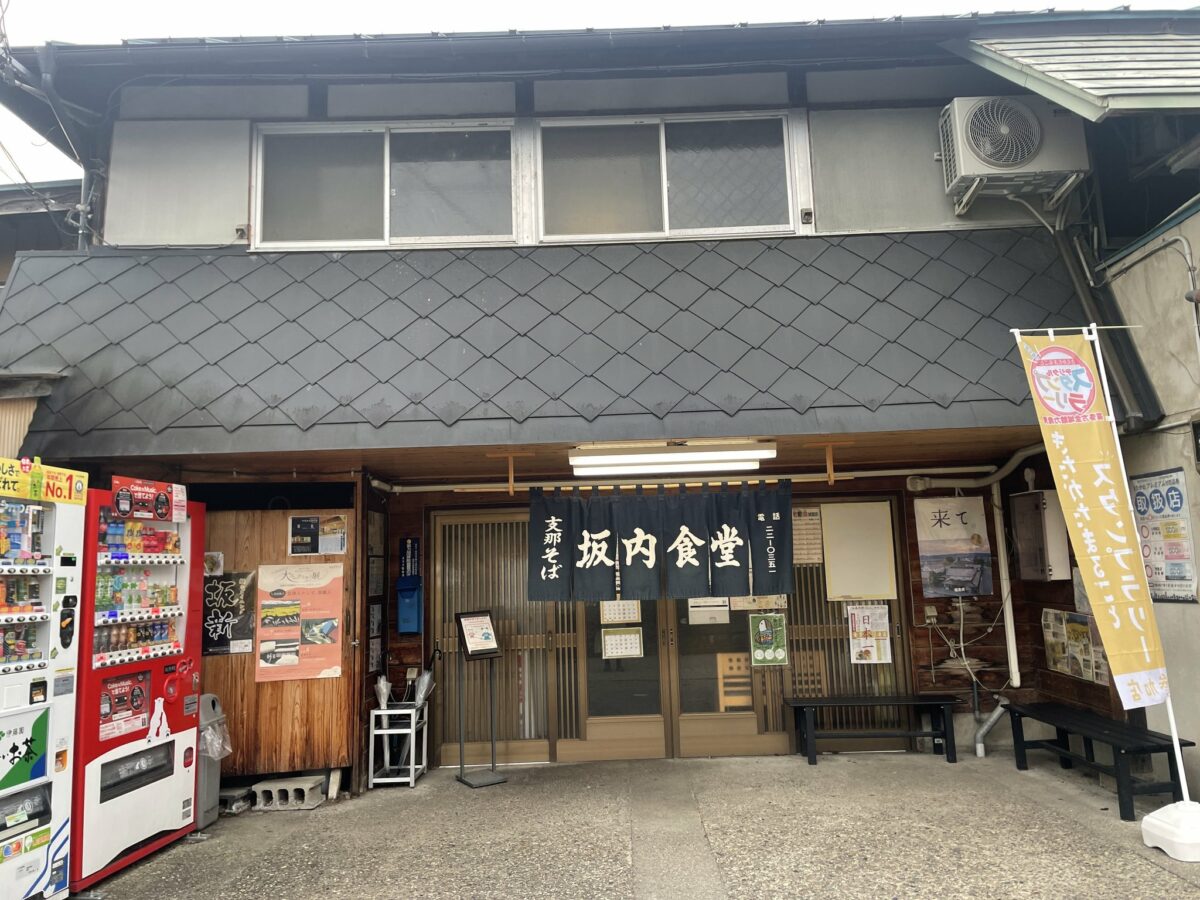
I took a 30-minute train ride to Kitakata just to try the famous Bannai Shokudo. The restaurant is tucked away in a quiet town, and I even wondered, “Can there really be a ramen shop out here?” Its old-fashioned diner-like appearance only made me more excited to try the ramen.
I started with a sip of the broth, and it was so light and delicious that I almost worried I might drink it all before finishing the noodles! The broth coated the noodles perfectly, making every bite incredibly satisfying. The ramen was so good that I felt the journey to Kitakata had been completely worth it.
Conclusion
Not many people—not even Japanese travelers—venture north of Tokyo to explore these destinations. But the region is full of incredible food and fascinating places to visit.
If you have plenty of time during your stay in Japan, I highly recommend adding this lesser-known area to your itinerary. It’s a hidden gem that I often recommend to my Japanese friends, too.